
 Available in US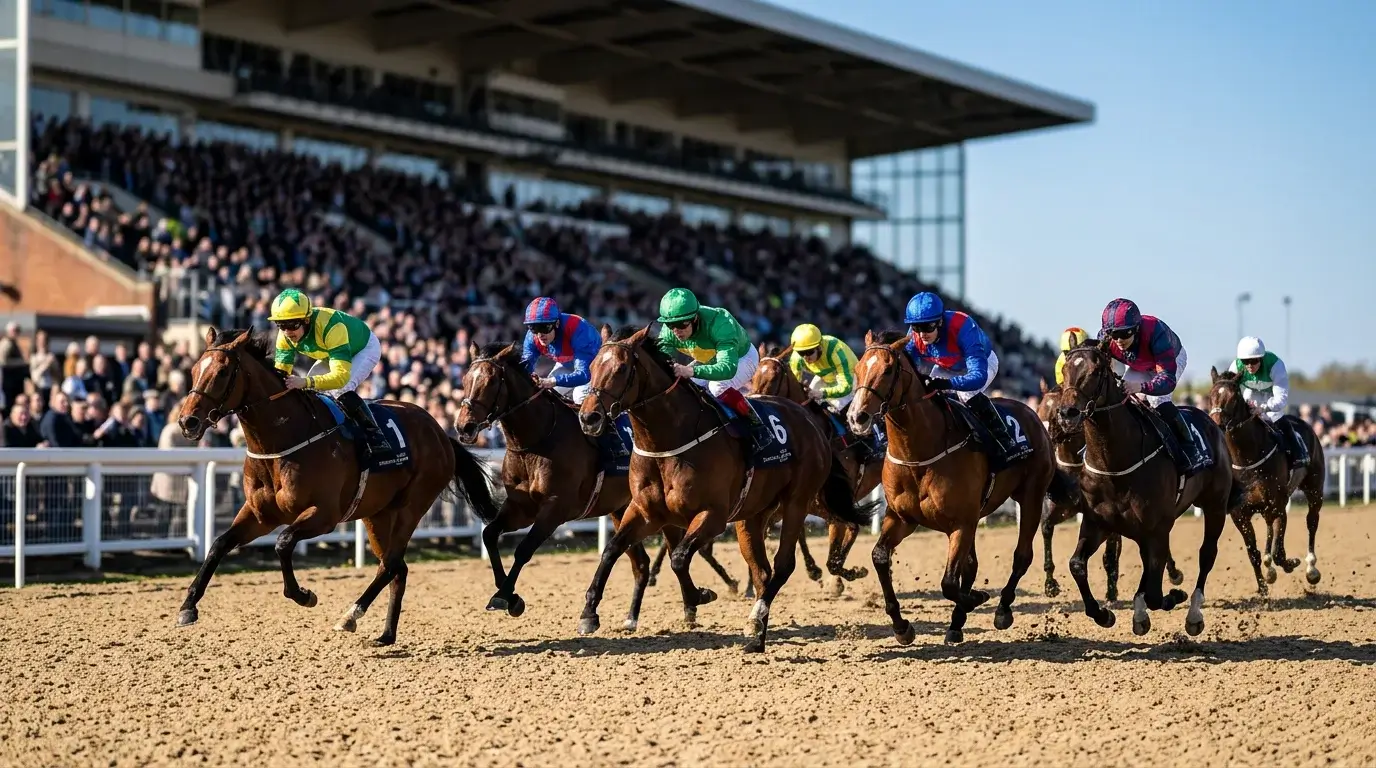
The All-Weather Championships represent British racing’s premier series for synthetic surface racing, culminating in Finals Day at Newcastle. Throughout the winter months, horses accumulate points through qualifying races at Britain’s all-weather tracks, competing for the chance to contest championship finals across multiple distance categories. The series elevates all-weather racing from convenient winter alternative to legitimate competitive circuit with its own prestige.
Newcastle’s role as Finals Day host reflects the track’s status within British all-weather racing. The course became the first to stage a Group 1 race on synthetic surface when the Vertem Futurity Trophy moved there in 2019, with Kameko winning before going on to claim the 2000 Guineas. This breakthrough demonstrated that top-class racing could flourish on all-weather, lending credibility to the Championships’ ambitions.
What follows covers the Championship structure, Finals Day itself, and practical information for those planning to attend or bet on this distinctive fixture.
Newcastle All-Weather Championships — More on this topic at newcastle horse racing results.
Championship Structure
The All-Weather Championships operate throughout the winter season, with qualifying races taking place at Newcastle, Wolverhampton, Southwell, Lingfield, Kempton, and Chelmsford. Each qualifying race awards points to placed horses, with winners receiving the most points and places receiving diminishing totals. The accumulated points determine championship standings heading into Finals Day.
Distance Categories
The Championships divide into distance categories, each culminating in a separate final. Sprint races cover 5-6 furlongs, mile races their named distance, middle-distance contests span 1 mile 2 furlongs to 1 mile 4 furlongs, and staying races extend to 1 mile 6 furlongs and beyond. Additionally, fillies-only categories provide dedicated opportunities for female horses across various distances.
This structure ensures specialists at each distance have genuine championship targets. A horse perfectly suited to sprinting need not compete against stayers, while stamina-oriented types can pursue glory over their preferred trips.
Fast-Track Qualifiers
Certain designated races offer fast-track qualification to Finals Day. Winners of these races gain automatic entry to the relevant final regardless of points accumulated elsewhere. This creates strategic interest throughout the qualifying period, as trainers may target specific fast-track races rather than accumulating points gradually through multiple runs.
Points System
The points allocation rewards consistency alongside individual race wins. Horses who finish second or third in multiple qualifiers can accumulate enough points to challenge those with fewer wins but higher single-race points totals. This system produces varied finals fields combining regular all-weather performers with horses who have made fewer but more impactful appearances.
Finals Day
Finals Day takes place on Good Friday, creating a fixed point in the racing calendar that attracts substantial attendance and broadcast attention. The scheduling provides a spring racing highlight when the turf season is just beginning elsewhere, positioning Newcastle as the centre of British racing attention for one high-profile afternoon.
Prize Money
Championship finals carry elevated prize money compared to standard all-weather fixtures, reflecting their status as season-culminating events. The total purse across all finals makes the day one of British racing’s richest outside the major turf festivals. As Anne Lambert CMG, Interim Chair of the Horserace Betting Levy Board, noted: “Racing is facing significant challenges so I am delighted to report that in 2024/25 the Board’s expenditure supporting Racing was £94.3m.” A portion of this support flows to events like the All-Weather Championships, maintaining competitive prize funds.
Day Schedule
Finals Day features a full card of championship races alongside supporting contests. The afternoon builds toward the feature finals, with earlier races providing betting opportunities and building atmosphere. The schedule allows each final adequate breathing room for pre-race analysis and post-race presentation, treating the day as a genuine festival rather than a routine fixture with enhanced prize money.
Atmosphere
Good Friday attendance typically exceeds standard Newcastle fixtures, with the championship aspect drawing crowds who might not otherwise attend winter all-weather meetings. The holiday timing helps, freeing potential racegoers from work commitments and creating a family-friendly afternoon. The course rises to the occasion with enhanced hospitality and entertainment beyond the racing itself.
Past Champions
The All-Weather Championships roll of honour includes horses who dominated the winter circuit before transitioning successfully to turf racing, alongside specialists who found their niche on synthetic surfaces and defended their titles across multiple seasons.
Notable Winners
Several championship winners have subsequently achieved Group race success on turf, validating the quality of competition within the series. These horses used the all-weather season to develop their abilities, building confidence and experience through competitive races before tackling the more prestigious turf programme. Their progress demonstrates that championship-level all-weather form represents genuine ability rather than merely synthetic-surface specialisation.
The sprint and mile categories have produced particularly notable champions, with several going on to compete creditably in Royal Ascot and other premium summer meetings. The staying category, contested over longer distances, has likewise identified horses capable of maintaining their form when stepped up to Listed or even Group company on grass.
All-Weather Specialists
Other champions found their calling on artificial surfaces, returning year after year to compete for titles on ground that suited them better than turf. These specialists illustrate the value of understanding surface preferences. Trainers who identify horses suited to all-weather racing and target the championship series accordingly can achieve significant success without requiring turf-class ability.
Some horses have won championships in consecutive years, demonstrating the consistency that this format rewards. Unlike single-day festivals where luck plays a larger role, the championship structure favours horses who maintain form across an entire season of qualifying races before producing their best on Finals Day.
Trainer Dominance
Certain trainers demonstrate particular expertise in preparing horses for the Championships. Their yards produce multiple champions across seasons, reflecting systematic understanding of what the series demands and deliberate planning to meet those demands. Noting which trainers have won multiple finals provides useful context when assessing declarations.
Attending Finals Day
Finals Day ranks among Newcastle’s busiest fixtures, requiring advance planning for those intending to attend.
Tickets
Advance booking is strongly recommended. Premier enclosure tickets sell quickly once released, and hospitality packages often reach capacity well before the day itself. Standard enclosure tickets may remain available closer to the date, though advance purchase typically offers better pricing than on-the-day admission.
Hospitality
Finals Day hospitality attracts corporate bookings and groups celebrating the bank holiday weekend. Restaurants and private boxes book out early, sometimes before general admission tickets become available. If hospitality suits your plans, enquire months ahead rather than weeks.
Best Viewing
Premier enclosure offers the best combination of proximity to the action and access to superior facilities. The parade ring area becomes particularly crowded before championship finals, so position yourself early if assessing runners matters for your betting. The grandstand provides elevated viewing over the finishing straight, useful for watching competitive finishes unfold.
Transport
Good Friday road traffic can be unpredictable, with holiday travel patterns affecting routes to the course. Allow extra time compared to standard fixtures. The Metro provides a reliable alternative, with shuttle buses operating from Regent Centre station to the course entrance throughout the afternoon.
The Championships’ Place in British Racing
The All-Weather Championships have established themselves as the definitive conclusion to Britain’s synthetic racing season. What began as an attempt to add meaning to winter racing has evolved into a genuine competitive circuit with its own prestige, culminating in a Finals Day that draws crowds and broadcast attention befitting its status.
For punters, the series provides months of qualifying races followed by championship finals where form, fitness, and distance preferences collide in competitive climaxes. For racegoers, Good Friday at Newcastle offers a spring racing occasion with atmosphere and significance that midweek winter cards cannot match. The Championships reward attention throughout their qualifying period and deliver a Finals Day worthy of that investment.
See also Newcastle Results Yesterday.
