
 Available in US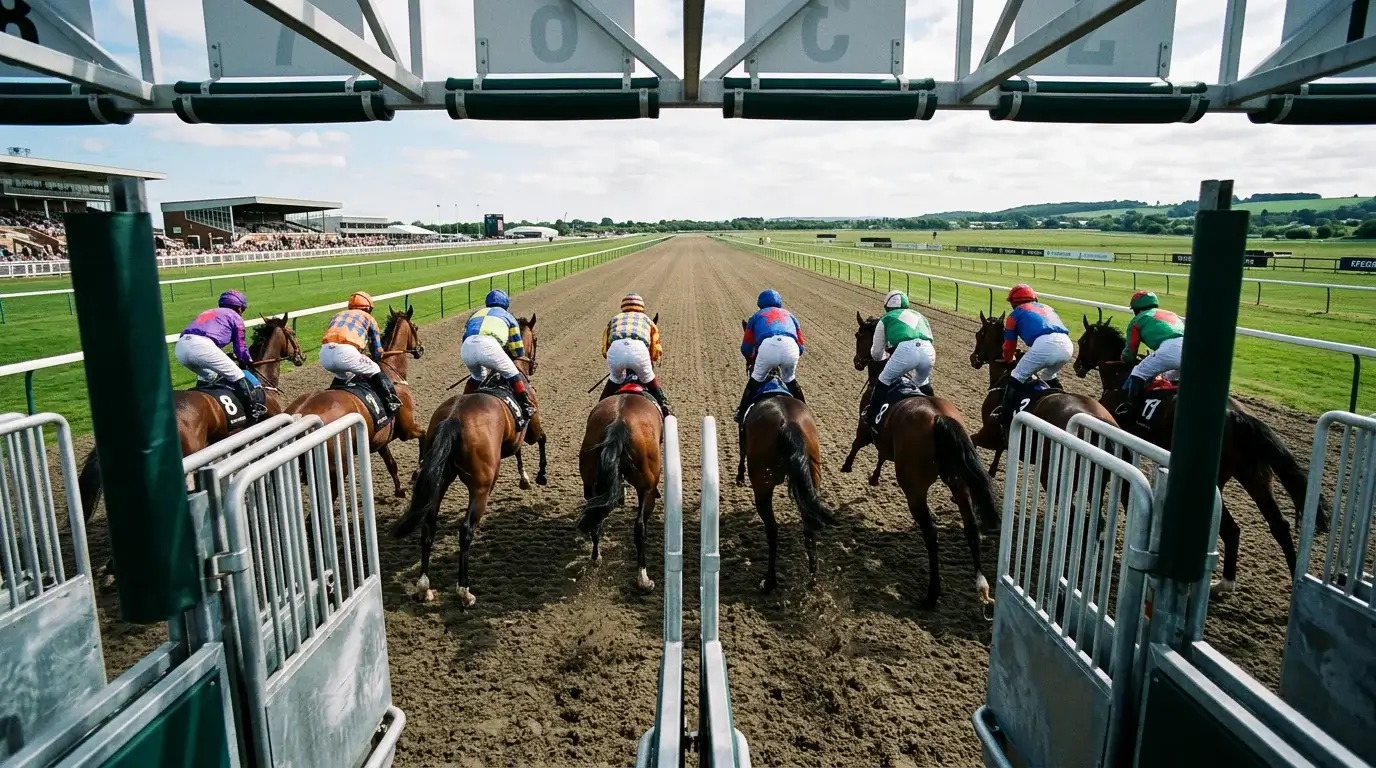
Sprint racing at Newcastle utilises the straight course, providing uninterrupted racing from start to finish without the complications of bends. The configuration suits pure speed horses who can break sharply and maintain velocity across the minimum distances. Five furlong and six furlong races dominate the sprint programme, each with slightly different characteristics that reward different types of horses.
The straight course creates distinctive racing patterns. Draw position matters significantly, with statistical analysis showing high draws carrying consistent advantages across sprint distances. Stalls 1 and 2 record a PRB of just 0.45, meaning horses drawn there beat fewer than half their rivals on average. This bias emerges from track geometry and racing patterns, creating opportunities for punters who factor draw into their selections.
What follows examines sprint racing at Newcastle in detail, covering the specific characteristics of each distance and the factors that distinguish successful sprinters at Gosforth Park.
Newcastle Sprint Races — More on this topic at newcastle horse racing results.
Five Furlong Racing
Five furlongs represents the minimum racing distance on the flat, a pure test of speed where races unfold rapidly from start to finish. At Newcastle, the 5f start positions horses at the far end of the straight with the entire track ahead.
Track Configuration
The 5f course runs with a slight uphill gradient toward the finish, though gentle enough that it barely affects pure sprinters. The track width allows horses to find their preferred racing lines without excessive crowding, though large fields inevitably create traffic issues. The Tapeta surface provides consistent footing throughout, eliminating the variable ground that affects turf sprinting.
The starting stalls accommodate large fields when required, though sprint races at Newcastle typically attract between 8 and 14 runners. Larger fields create more complex dynamics where draw advantages and early speed become even more critical to success.
Draw Considerations
High draws hold measurable advantage at 5f. Horses drawn in double-figure stalls historically outperform those drawn in single digits. The standside rails consistently underperform, making low draws a negative factor that should be reflected in betting assessments. In large fields, this bias strengthens as congestion on the inside rail intensifies.
Pace Dynamics
Five furlong races typically feature fierce early competition for lead positions. Horses who lack early speed find themselves immediately detached, facing impossible tasks against rivals establishing commanding leads. The short distance leaves minimal time for closers to make ground, making early position critical to success.
Race Character
The races themselves unfold over approximately 55-60 seconds, with fractions measured in tenths of seconds. Horses who break slowly face immediate disadvantage. Those who travel smoothly through the opening furlongs often maintain their positions through the finish. Late rallies occasionally succeed but represent exceptions rather than the norm. The consistency of the Tapeta surface means times recorded offer reliable form indicators that transfer across different meetings at the course.
Six Furlong Racing
Six furlongs introduces a stamina element absent from minimum-trip racing. The additional furlong allows horses who lack absolute early speed to figure competitively, provided they possess the acceleration to close through the final stages.
Stamina Component
The extra distance tests horses who may burn out before the finish at 5f. Some sprinters find their ideal trip at 6f, able to use early speed without exhausting themselves before the winning post. Others discover the additional furlong stretches them beyond comfort, fading when rivals maintain momentum. Identifying these preferences through form study aids selection.
Draw Dynamics
Draw bias at 6f mirrors the 5f pattern but with slightly reduced intensity. High draws retain advantage, though the extra running time allows some recovery for those drawn low who break well. The standside rails remain unfavoured, but horses drawn in stalls 3-5 perform better at 6f than at 5f relative to higher draws.
Pace Scenarios
Six furlong races accommodate more varied tactics than 5f contests. Hold-up horses who cannot lead early have sufficient distance to make progress, while front-runners must judge their effort to avoid premature fatigue. The pace tends to be fierce but sustainable, with the final furlong often producing position changes that 5f races lack.
Betting Considerations
The tactical variety at 6f creates more competitive racing where form analysis proves more reliable than at 5f. Horses have time to demonstrate their ability rather than losing chances through poor breaks alone. This makes form study more rewarding, though draw advantages still apply and should inform betting decisions.
Sprint Specialists
Horse Profiles
Successful Newcastle sprinters typically share certain characteristics. Quick breaks from the stalls matter enormously, with horses who dawdle at the start facing immediate disadvantage. The ability to maintain top speed across the full distance separates winners from also-rans. Some horses develop reputations as Newcastle specialists, returning repeatedly to a track whose configuration suits their running styles.
Trainer Patterns
Northern trainers dominate Newcastle sprint statistics through geographical proximity and accumulated course knowledge. Yards specialising in sprinters target Newcastle’s straight course deliberately, preparing horses specifically for its demands. Noting which trainers succeed at Newcastle sprints and following their future entries provides useful shortlisting for selections.
Jockey Expertise
Jockeys who understand Newcastle’s sprint dynamics position their mounts advantageously from the start. Experience of the track’s subtleties, knowing when to push for position and when to settle, distinguishes effective riders from those merely competent elsewhere. Regular Newcastle riders accumulate this knowledge naturally; occasional visitors may lack it despite ability at other venues.
Course-and-Distance Winners
Horses who have won at Newcastle over sprint trips deserve serious respect when returning. The course-and-distance combination confirms both track suitability and distance aptitude. These proven performers should feature prominently in selections unless other factors strongly contradict their chances.
Betting the Sprints
Sprint betting at Newcastle rewards attention to specific factors that matter more here than at other venues.
Draw Priority
Incorporate draw into every sprint selection. Horses drawn low face statistical headwinds that even ability may not overcome. Horses drawn high enjoy advantages that may compensate for moderate ability. Adjust your assessment of each runner based on draw position before committing money.
Early Speed
Review each runner’s break record from recent starts. Horses who consistently break slowly face compounding disadvantage at Newcastle where early position proves crucial. Those with demonstrated gate speed hold advantages that persist through the race.
Field Size Impact
Large fields intensify draw bias and create traffic problems that affect low-drawn horses disproportionately. Small fields reduce these effects, allowing ability to assert more cleanly. Adjust draw weighting based on field size; in fields under eight runners, draw matters less than in full fields of sixteen.
Value in Speed Figures
Speed figures that incorporate time, weight, and going provide objective comparison across different meetings. Horses who have recorded fast figures at Newcastle sprints under similar conditions represent form that should reproduce. Those with slower figures face questions about whether they can compete with proven speedsters.
Sprint Success at Newcastle
Newcastle’s sprint programme rewards specialists who suit the straight course configuration. The draw bias creates systematic advantages that informed punters can exploit. The distinction between 5f and 6f racing offers different opportunities for different horse types. Together, these factors make sprint betting at Newcastle a specialised pursuit where knowledge translates directly into edge.
Build your understanding through observation and tracking results. Note which draws succeed, which horses return to win repeatedly, and which trainers consistently produce sprint winners at Gosforth Park. This accumulated knowledge compounds over time, improving your selections across the full sprint programme throughout the racing calendar.
See also Newcastle Mile Races.
