
 Available in US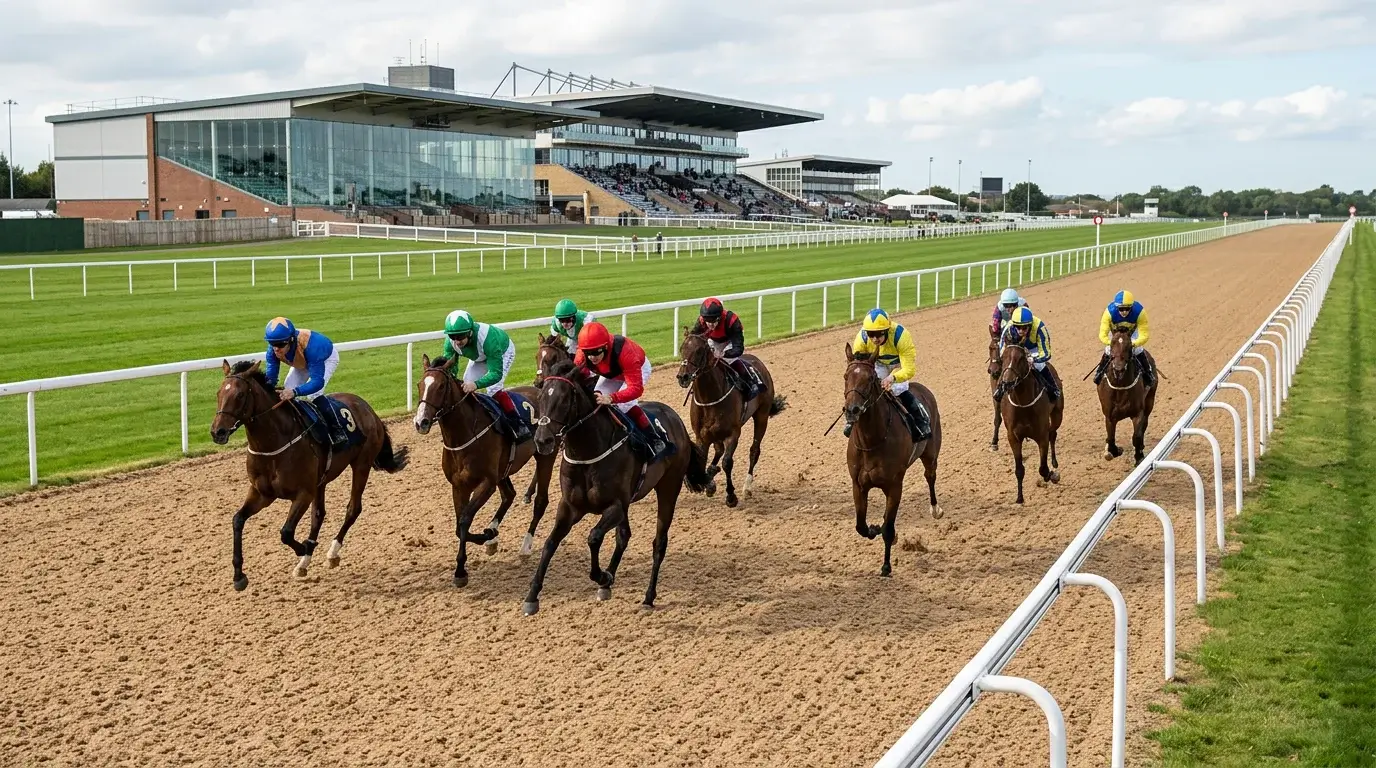
Newcastle’s straight mile ranks among British racing’s finest configurations for the distance. The full mile unfolds without bends, creating pure racing where ability and tactics matter more than track geometry. This configuration attracts quality milers who might find tighter circuits less suitable, while providing punters with racing that rewards form analysis over course-specific quirks.
John Gosden captured the track’s appeal when discussing all-weather racing: “The all-weather track I like the most is Newcastle; it’s very fair and has a good Tapeta surface. When the ground goes too firm in the summer, or becomes bottomless at the end of autumn, the all-weather is a nice place to be.” That fairness particularly applies to mile racing, where the straight course eliminates the advantages that bend-handy horses enjoy elsewhere.
The straight mile configuration means Newcastle operates the largest synthetic racecourse in the world, combining this mile course with the oval circuit for longer distances. What follows examines mile racing specifically, covering configuration, pace scenarios, draw factors, and the races that showcase the distance.
Newcastle Mile Races — More on this topic at newcastle horse racing results.
Track Configuration
The Straight Mile
Newcastle’s mile runs entirely on the straight course, starting from chutes at the far end and finishing in front of the main grandstand. The track runs broadly north to south, meaning wind direction affects racing more than at circular courses where horses face different directions through the race. The configuration rewards horses who handle straight-line racing, with no bends requiring positional adjustment.
Gradient and Camber
A gentle uphill gradient characterises the closing stages, asking questions of horses whose stamina stretches at the mile trip. The incline remains subtle enough that genuine milers handle it without difficulty, but marginal stayers who struggle to see out the trip find the final furlong challenging. The camber remains largely flat across the track width, meaning no significant advantage accrues from racing on any particular part of the course.
Width and Racing Room
The track width accommodates large fields without excessive crowding, though runners naturally converge toward the centre as races progress. Horses drawn wide can hold their positions without surrendering ground, unlike at tighter courses where wide draws force early effort to secure rail positions. This width contributes to the track’s fairness reputation.
Surface Consistency
The Tapeta surface maintains consistent going throughout the mile, with no significant variation between different sections of the track. Horses can rely on stable footing from start to finish, eliminating the ground variation that complicates turf mile racing where different parts of the track may ride differently. This consistency makes form comparison more reliable across different meetings.
Pace Analysis
Typical Pace Scenarios
Mile races at Newcastle typically develop steady early pace without the frantic competition for position that characterises sprint racing. The extended distance gives jockeys confidence that opportunities will arise later, reducing urgency to establish position immediately. This steadier tempo often produces bunched fields entering the final quarter mile, creating exciting finishes where multiple horses hold winning chances.
Front-Running Viability
Front-runners can succeed at Newcastle’s mile when they dictate tempo that suits their stamina reserves. The straight configuration means leaders see their rivals throughout, maintaining awareness of challenges without needing to glance back through bends. However, setting too strong a pace risks exhaustion before the finish, with the uphill gradient punishing those who overexert early. Successful front-runners at the distance typically possess genuine stamina to complement their early speed.
Hold-Up Tactics
Patient tactics suit the Newcastle mile when pace develops sufficiently to create gaps for finishers. The track width allows held-up horses to find racing room without significant interference, while the distance provides time to make gradual progress. Horses who finish strongly often find the configuration suits their running style, arriving with momentum while rivals tire. Jockeys known for patient rides often excel at the track.
Sectional Analysis
Breaking the mile into sectional times reveals how races develop. Moderate early fractions followed by quickening late fractions indicate races that suit closers. Fast early sections with slower finishes favour horses who established early positions. Comparing a horse’s sectional patterns against the typical race profile helps predict how it might perform under different tactical scenarios. Several form services now provide sectional data that enables this analysis.
Draw Implications
High Draw Advantage
Statistical analysis confirms high draws maintain advantage at the mile, continuing the pattern observed in sprint racing. While the effect diminishes compared to shorter trips where early position proves more decisive, horses drawn wide still outperform those drawn low over sufficient sample sizes. The standside rails underperform throughout the straight course programme.
Diminished Impact at Mile
The mile distance reduces draw impact compared to sprints because the extended trip provides time for positional recovery. Horses drawn low who break well can establish competitive positions before the first quarter mile concludes, whereas in sprints they face immediate and permanent disadvantage. This reduced impact means draw should inform rather than dominate mile selections.
Field Size Considerations
Small fields largely neutralise draw bias at the mile. With fewer runners competing for space, even low-drawn horses find racing room without difficulty. Large fields intensify the bias as competition for favourable positions creates congestion that affects inside runners disproportionately. Adjust draw weighting based on declared field size.
Tactical Interaction
Draw interacts with running style at the mile. Front-runners drawn high can establish position comfortably; those drawn low must use more energy to secure leads. Hold-up horses face less draw impact because they position based on rivals rather than stalls, though wide draws may force them wider than ideal through the middle stages.
Notable Mile Races
All-Weather Championships
The All-Weather Mile Championships qualifier and final feature prominently in Newcastle’s calendar. These races attract quality milers competing for championship points and finals berths. The prize money and prestige elevate these contests above routine mile handicaps, drawing entries from trainers who target the series specifically.
Conditions Races
Conditions races at the mile often showcase horses with Group race potential gaining experience or preparing for higher-profile engagements. The straight course provides an ideal assessment ground for trainers evaluating milers’ genuine ability without track-specific complications. Watching these races reveals horses capable of progressing beyond all-weather level.
Handicaps
The bulk of Newcastle’s mile programme comprises handicap races at various class levels. These competitive contests suit punters who enjoy form analysis, as handicap marks provide clear ability comparisons across fields. Well-handicapped horses who suit the track can land multiple wins across a season’s programme.
Evening Racing
Summer evening cards frequently feature mile races that attract decent fields despite the less prestigious slots. These meetings offer punters opportunities to watch and bet on competitive racing with reduced attendance compared to weekend afternoons, potentially creating value in on-course markets where casual money holds less influence.
Mile Racing Excellence
Newcastle’s straight mile provides racing conditions that reward genuine ability over track-specific advantages. The configuration suits horses who act on straight courses and handle the Tapeta surface, while accommodating varied tactical approaches from front-running to patient waiting tactics. The All-Weather Championships give the distance additional significance beyond routine fixtures.
For punters, mile racing at Newcastle offers reliable conditions for form analysis. The track’s fairness means ability usually prevails, though draw factors warrant inclusion in selection processes. Building familiarity with the distance’s characteristics improves your chances across the numerous mile races that feature throughout Newcastle’s extensive racing programme.
See also Newcastle Staying Races.
