
 Available in US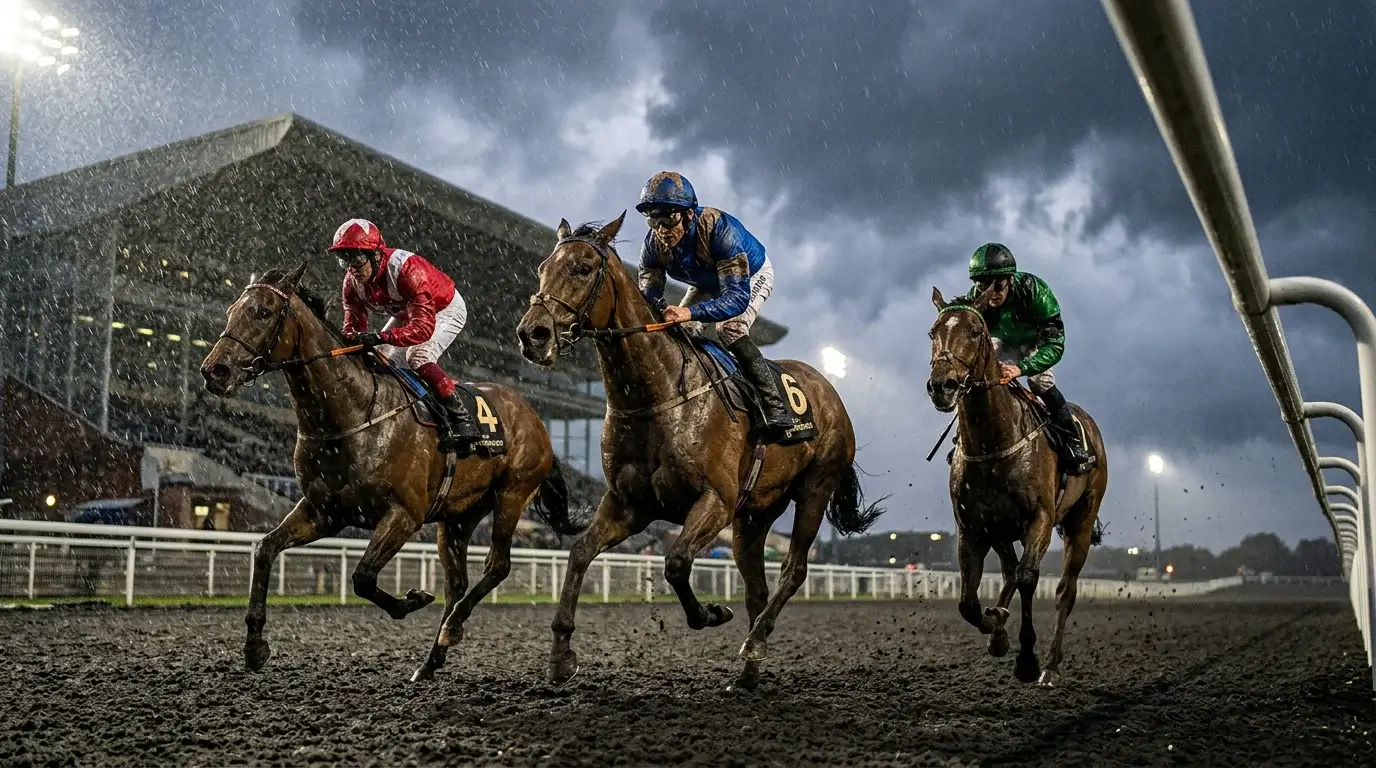
Weather defines turf racing. Ground conditions shift with every shower; frost cancels fixtures entirely; summer firmness creates unsound surfaces that trainers avoid. Newcastle’s Tapeta surface was installed precisely to escape this meteorological tyranny, offering consistency when turf tracks struggle and racing certainty when waterlogged courses close.
Yet calling Tapeta immune to weather overstates the case. Rain changes drainage patterns and surface speed. Extreme cold can affect the synthetic material’s behaviour. Intense heat requires watering interventions. Understanding these effects — subtler than turf variations but still meaningful — provides edges for bettors who track conditions rather than assuming all-weather means all-conditions-identical.
The first half of 2025 saw thirty-two fixtures abandoned nationally, with thirty of those being jump meetings — turf racing suffering while all-weather venues continued. Newcastle’s ability to race through winter weather underlines the surface’s value, but the specifics of how conditions affect performance reward closer examination than the simple “racing goes ahead” narrative suggests.
Newcastle Weather Impact — More on this topic at newcastle horse racing results.
Rain Effects on the Tapeta Surface
Tapeta’s design prioritises drainage. The synthetic composition — silica sand bound with wax coating, mixed with rubber fibres — allows water to pass through rather than pooling on the surface. Moderate rainfall barely affects racing; meetings proceed when equivalent precipitation would waterlog turf courses. This resilience explains much of all-weather racing’s scheduling value during autumn and winter months.
Drainage Capacity and Limits
Newcastle’s Tapeta drains efficiently under normal rainfall. Showers during racing create minimal disruption; surface water disappears within minutes rather than accumulating. Going descriptions typically remain “Standard” through varied conditions that would shift turf from good to soft to heavy across a single afternoon.
Prolonged heavy rain tests the system’s limits differently. While water passes through the surface layer, underlying substrate saturation can slow drainage rates. Extended downpours — four or more hours of persistent heavy rain — may cause temporary pooling until drainage catches up. Such conditions are rare but create noticeably slower running than typical Standard going.
Surface Speed Variations
Post-rain Tapeta often runs slightly slower than dry conditions. The moisture content, even when draining efficiently, adds marginal resistance compared to the optimal quick surface seen during dry spells. Bettors noting “Standard” going after morning rain should expect times perhaps one or two seconds slower per mile than on genuinely dry Standard surfaces.
This variation affects front-runners differently than closers. Slower surfaces tax early-pace horses who must maintain effort against increased resistance. Horses preferring to come from behind gain advantages when rain has softened conditions, their finishing kicks encountering less speed-burned leaders to overhaul. Adjusting pace analysis for recent rainfall — even when official going descriptions remain unchanged — captures edges invisible to those treating all Standard going as identical.
Cold Weather and Frost Protocols
Freezing temperatures present all-weather racing’s primary abandonment risk. While synthetic surfaces avoid the waterlogging that closes turf courses, frozen ground becomes dangerously firm regardless of composition. Newcastle’s northern location — exposed to North Sea weather systems — creates frost risk throughout winter months.
When Racing Is Called Off
Track inspections occur when overnight temperatures drop below freezing. Officials assess surface consistency using penetrometer measurements and physical inspection, checking whether the Tapeta has frozen to unsafe firmness. Morning inspections typically occur around 7:00am, with go/no-go decisions communicated to trainers and punters before horses begin travelling.
The Tapeta’s composition provides some frost resistance compared to turf. The wax coating and synthetic fibres retain more flexibility at low temperatures than natural ground, meaning racing can proceed at temperatures that would abandon equivalent turf meetings. This margin — perhaps racing at minus two degrees Celsius when turf would require cancellation at plus one — extends the viable racing window significantly.
Anticipating Frost Risks
Clear skies and light winds create maximum frost risk. Cloud cover insulates ground temperatures; wind prevents cold air settling. Punters following Newcastle racing through winter should monitor overnight forecasts with these factors in mind. A forecast showing minus four with clear skies presents serious abandonment risk; minus two with cloud cover and breeze likely allows racing.
Morning market movements often signal inspection outcomes before official announcements. Dramatic drift across an entire card suggests smart money anticipates abandonment; stable prices imply confidence racing proceeds. Reading these signals provides early positioning opportunities when inspections seem marginal.
Hot Weather Considerations
Summer heat affects the Tapeta differently than turf. While grass courses become firm and potentially jarring, synthetic surfaces respond to temperature through changes in wax behaviour and moisture management. Newcastle’s location moderates extreme heat compared to southern venues, but warm spells still influence racing conditions.
Surface Response to Heat
High temperatures soften the wax binding in Tapeta’s composition slightly, creating marginally slower surfaces than cooler conditions produce. This effect reverses the intuition from turf racing, where heat typically means faster ground. On Tapeta, the hottest days may actually ride slowest — a counterintuitive pattern that catches bettors applying turf assumptions.
Track staff combat heat effects through morning watering, maintaining moisture content that prevents excessive surface temperature rise. The Tapeta’s ability to retain applied water — rather than rapidly evaporating it as turf does — makes irrigation more effective. Post-watering conditions typically race close to Standard regardless of ambient temperature.
Horse Welfare Protocols
Extreme heat triggers welfare considerations beyond surface management. Temperatures above twenty-five degrees Celsius prompt additional cooling facilities and monitoring. Racing can be delayed or abandoned if conditions endanger equine health, though such extremes rarely affect Newcastle given its northeastern climate. Southern all-weather tracks face greater heat disruption; Newcastle’s moderated summers represent a competitive advantage for continuous summer programming.
Research into Tapeta safety demonstrates benefits beyond weather resilience. Studies indicate horses experience roughly fifty percent less concussion impact on the synthetic surface compared to dirt tracks — a benefit compounding across seasonal variations. Whether racing through rain, cold, or heat, the underlying surface properties protect runners in ways traditional going variations cannot match.
Forecasting and Abandonment Predictions
Accurate weather forecasting translates directly into betting opportunities. Knowing when meetings face abandonment risk allows position management; understanding how conditions affect surface behaviour informs selection adjustments.
Weather Information Sources
The Met Office provides the most reliable forecasts for Newcastle’s location. Their site-specific forecasts — searchable by postcode NE3 5HP for Gosforth Park — offer hourly breakdowns of temperature, precipitation, and wind. Racing Post and Timeform publish going predictions incorporating these forecasts, though their updates sometimes lag actual conditions.
Social media accounts from racecourse clerks and racing correspondents often provide real-time updates during marginal conditions. Following Newcastle Racecourse’s official channels during winter months captures inspection announcements faster than waiting for major media updates. Twitter feeds from northern racing journalists similarly provide ground-level intelligence before formal announcements.
Anticipating Going Changes
The going report issued on meeting mornings represents a snapshot, not a guarantee. Conditions evolve across cards, particularly when weather changes during racing. An afternoon shower may not affect official descriptions but will influence surface behaviour; temperature drops toward evening slow surface speed marginally. Building these anticipated changes into race-by-race analysis — rather than treating morning going as fixed — captures edges invisible to static assessment.
Historical patterns help prediction. Newcastle’s exposed coastal-adjacent position means weather arrives from the North Sea quickly and often intensifies unexpectedly. Forecasts showing approaching fronts from the east warrant caution; conditions may deteriorate faster than predictions suggest. Conversely, westerly weather patterns — rain systems arriving from inland — typically behave more predictably, with forecasts proving more reliable guides to actual conditions.
The All-Weather Advantage
Newcastle’s Tapeta surface was designed to provide racing certainty when turf tracks cannot. That mission succeeds: meetings proceed through conditions that would abandon grass courses, offering punters and trainers reliable scheduling throughout the year. The surface’s weather resilience underpins the venue’s position as Britain’s premier northern all-weather track.
Yet weather still matters here. Rain slows surfaces subtly; frost threatens winter fixtures; heat creates counterintuitive slowdowns. Understanding these effects — rather than assuming all Standard going performs identically — provides analytical edges over casual bettors. Newcastle races through weather that stops turf racing, but intelligent engagement requires appreciating how conditions affect outcomes within that resilient framework.
See also Newcastle Photo Finish.
