
 Available in US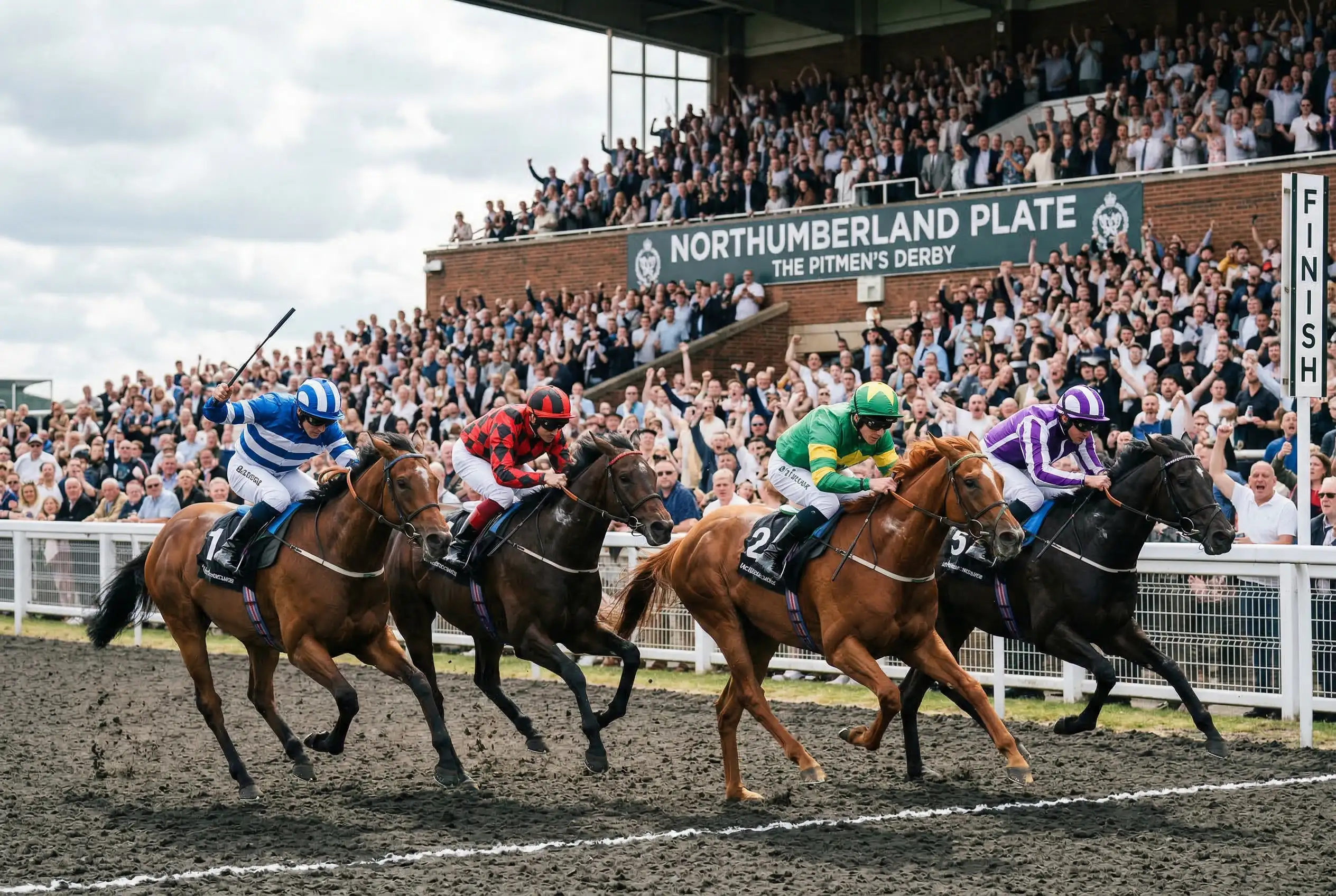
The Northumberland Plate holds a peculiar position in British racing: simultaneously one of the oldest handicaps in the calendar and one that most southern racing fans couldn’t pick out of a lineup. That’s their loss. The race known affectionately as the “Pitmen’s Derby” has survived since 1833, outlasting the coal industry that gave it its nickname, and now carries a prize fund of £150,000 that makes it Europe’s richest two-mile handicap. If you want to understand staying handicaps in Britain, you need to understand this race.
The Pitmen’s Derby name captures something important about the Northumberland Plate’s character. This was never a race for aristocrats parading their bloodstock. It belonged to working people who took unofficial holidays to watch horses run two miles around Gosforth Park. Miners, shipbuilders, factory workers — they packed the stands and hedged their bets and created an atmosphere unlike anything in the Home Counties. The industrial northeast has changed beyond recognition since those days, but the Plate retains that democratic spirit. Big fields, competitive handicapping, and unpredictable outcomes reward form study over connections.
Modern editions run on Newcastle’s Tapeta surface, adding another analytical layer to what was already a demanding handicapping puzzle. Two miles on synthetic ground sorts genuine stayers from pretenders, and the handicapper’s assessments face severe testing against reality. This guide examines the Plate from every angle: its history, its format, what works in betting markets, and what to expect if you attend. The 2026 running promises another chapter in a story nearly two centuries long.
Northumberland Plate 2026 — More on this topic at newcastle horse racing results.
History and Origins
The Northumberland Plate was first run in 1833 on Newcastle’s original Town Moor racecourse, a year before the city’s current racing infrastructure existed. Britain was still processing the Reform Act, William IV sat on the throne, and horse racing served as one of the few entertainments available to working people who couldn’t afford theatre or travel. The race emerged from this context — a handicap that gave ordinary punters a genuine chance to study form and back winners, rather than watching aristocratic owners parade predetermined results.
The move to Gosforth Park came in 1882, when the High Gosforth Park Company established the current racecourse. This relocation gave the Plate its permanent home and allowed proper grandstand development that the Town Moor site lacked. The race had already established its identity by then: a staying handicap run at the heart of summer, attracting the region’s attention like few other sporting events could manage.
The “Pitmen’s Derby” nickname emerged from the race’s connection to northeast coal mining communities. Miners would take unofficial days off to attend the Plate meeting, much to colliery owners’ frustration. The tradition became so embedded that some pits effectively closed for the day, recognising they couldn’t compel attendance when the entire community had other plans. This working-class ownership of the race distinguished it from southern fixtures where the sport remained largely an upper-class pursuit. The Plate belonged to people who worked with their hands and understood horses from practical experience rather than bloodstock catalogues.
One horse dominates the historical record with a feat never matched since. Underhand won the Northumberland Plate three consecutive times between 1857 and 1859, a sequence that seems almost impossible in a competitive handicap. The horse would have carried progressively higher weights after each victory, yet kept winning against fields presumably targeting him specifically. No horse has managed even two Plate victories since, let alone three. Underhand’s achievement speaks to either extraordinary ability, lenient handicapping by period standards, or both.
The twentieth century brought transformations that reshaped the race without destroying its character. The coal industry declined through nationalisation, pit closures, and eventual near-total elimination. The communities that once flooded Gosforth Park on Plate day dispersed or redirected their passions elsewhere. Yet the race survived, adapting its appeal to new audiences while maintaining the democratic handicap format that made it distinctive. Prize money grew to levels that attracted southern trainers, while the northeast retained enough local involvement to preserve the event’s regional identity.
The switch to all-weather racing marked the most significant recent change. When Newcastle installed Tapeta in 2016, the Plate moved from turf to synthetic surface, fundamentally altering the race’s characteristics. Purists complained that the Pitmen’s Derby deserved turf, but practically the change ensured the fixture could proceed regardless of weather. Summer meetings on turf often face firm ground concerns; on Tapeta, consistency removes that variable. Whether the surface change improved or diminished the race depends on perspective, but it certainly modernised the contest for contemporary conditions.
Race Format
The Northumberland Plate runs over two miles on Newcastle’s Tapeta surface, a distance that demands genuine stamina from its participants. This isn’t a race where speedsters can steal soft leads and hold on — the final furlongs expose any horse lacking the constitution for sustained effort. The two-mile trip separates stayers from horses who merely get trips; only those bred and trained for the distance compete effectively.
As a handicap, the race operates on the British Horseracing Authority’s rating system, with the handicapper allocating weights based on assessed ability. Horses rated higher carry more weight, theoretically equalising chances across the field. In practice, handicaps this competitive require finding horses whose ratings underestimate their current ability — either improvers who’ve progressed since their last run, or well-handicapped veterans whose marks reflect poor recent form rather than diminished capability.
Entry conditions typically allow horses rated within a specified band, usually somewhere between 0-105 or similar parameters that ensure competitive fields without admitting genuine Group-class stayers who would overwhelm the opposition. The exact conditions vary year to year as racing authorities adjust parameters, but the principle remains consistent: create a race where 20 horses have legitimate winning chances rather than two or three.
Field sizes regularly reach the maximum permitted, often 20 or more runners splitting across the width of Newcastle’s track. Large fields create their own dynamics: traffic problems in running, the importance of drawing well, and the potential for unexposed horses to emerge from the pack at value prices. A small-field Plate would be a contradiction in terms — the race’s identity depends on its democratic openness to numerous contenders.
Weight allocations spread from top weight around 10 stone down to the minimum permitted, creating differences of two stone or more across the field. A horse carrying 8 stone 7 pounds concedes huge advantages to one at 10 stone 2 pounds, but the ratings suggest that weight difference reflects their respective abilities. The art of Plate betting involves identifying where the handicapper has erred — which horses deserve lower weights than allocated, or which have improved beyond their current marks.
The 2026 Edition
The 2026 Northumberland Plate continues the race’s modern tradition as a summer feature at Newcastle, typically scheduled for late June or early July. The exact date follows BHA fixture announcements, which balance the Plate’s requirements against broader calendar considerations. What remains constant is the race’s position as Newcastle’s flagship flat event, drawing attention that the track’s regular cards cannot match.
Ante-post markets open months before the race, though liquidity builds slowly until entries clarify which horses trainers are targeting. Early prices reward those confident in identifying potential runners, but the risk of non-participation makes ante-post Plate betting speculative until declarations confirm fields. Some punters prefer waiting for final fields; others accept the risk for better prices on horses whose participation seems likely based on campaign patterns.
Current trends suggest looking for horses who’ve contested staying handicaps through the spring with encouraging runs. The race attracts entries from across Britain, with northern trainers naturally represented but southern yards increasingly targeting the prize money. Trainers who’ve won the Plate previously understand its unique demands and often return with suitable candidates year after year.
The Tapeta surface element narrows the form search somewhat. Horses with proven all-weather form, particularly at Newcastle or Wolverhampton, start with advantages over those attempting synthetic surfaces for the first time. Two miles on Tapeta differs from two miles on turf, and horses who’ve handled one may struggle with the other. The wise approach combines staying handicap form with demonstrated Tapeta competence, narrowing a large field to more manageable shortlists.
Prize money distribution ensures that places pay, making each-way betting viable for those cautious about outright selection in such competitive contests. The £150,000 purse rewards placed horses generously enough that finishing in the frame represents a successful outcome for connections, even without winning. This structure encourages trainers to run horses with place chances rather than withdrawing anything unable to win outright.
Past Winners
Recent Northumberland Plate winners reveal patterns useful for future selections. The race has consistently rewarded horses between four and six years old, with the occasional older stayer proving that class endures beyond typical peak racing age. Three-year-olds rarely contest the Plate seriously due to weight terms that favour older horses, and the demands of two miles against seasoned handicappers expose juvenile limitations.
Trainers matter significantly in handicap races of this calibre. Yards experienced in placing horses in valuable staying events develop expertise that translates into Plate success. Mark Johnston’s operation, now continued under the Johnston banner, has targeted the race successfully over decades. Richard Fahey and Keith Dalgleish represent northern training powers who understand Newcastle’s characteristics intimately. William Haggas and Sir Michael Stoute have sent northern raiders to win from their southern bases, demonstrating that quality preparation transcends geographical advantage.
Jockey bookings often reveal trainer intentions. When a leading jockey accepts a Plate ride for a trainer they don’t usually partner, that commitment signals genuine expectation. Conversely, when a yard’s stable jockey rides elsewhere and leaves the Plate mount to a junior, scepticism is warranted. Reading between the lines of jockey arrangements provides insight beyond raw form figures.
Notable recent winners include Orfeo, who won the 2021 edition under jockey David Egan for trainer George Baker, demonstrating that southern raiders with appropriate credentials can overcome any home advantage. Highland Chief won in 2022, providing trainer Paul Nicholls with a rare flat success from his predominantly jumps operation. Who Dares Wins captured the 2019 running, showing that improving four-year-olds can progress through the handicap ranks to land valuable prizes.
The common thread among winners is combination of genuine staying power, current wellbeing, and ratings that leave room for improvement. Horses exposed at their marks struggle to win races this competitive — the winner typically brings something extra that the handicapper couldn’t anticipate. Whether that’s fitness from recent runs, a first attempt at the trip unlocking latent stamina, or simply peaking at the right moment, successful Plate horses surprise their ratings.
Weights carried by winners hover around the middle of the range rather than extremes. Top weights bearing 10 stone rarely prevail against large fields of horses receiving significant amounts. Bottom weights often lack the quality that their light burdens imply. The productive zone lies between 8 stone 10 pounds and 9 stone 7 pounds, where capable horses receive enough weight to make differences while retaining the ability to compete. Exceptions exist, but betting strategy should acknowledge where historical winners clustered.
Betting Strategies
Betting the Northumberland Plate requires respecting the race’s handicap nature while identifying edges that casual punters overlook. Large fields mean that favourites disappoint regularly — the market leader wins perhaps one in five runnings, making outright favourite backing a losing long-term strategy. Value lies elsewhere in the betting, among horses whose chances the market underestimates.
Draw analysis matters even over two miles, though less dramatically than in sprints. Newcastle’s Tapeta oval doesn’t produce the extreme draw biases of its straight course, but middle to high draws avoid potential traffic problems on the first bend when 20 horses funnel into racing room. Low draws can work if the jockey accepts being ridden prominently to avoid the crush, but that tactical requirement limits options. When two similarly assessed horses occupy different market positions, check their stalls — the draw might explain the discrepancy.
Pace analysis rewards attention in staying handicaps. The Plate often features tactical battles between trainers who want their horses covered up versus those who need to bowl along. When multiple confirmed front-runners enter, the pace likely becomes genuine, favouring closers who can pick through tired horses late. When no obvious leader exists, false pace leaves the race open to front-runners who steal first run. Studying recent running styles of declared runners indicates which scenario applies.
Recent form over similar trips provides the most reliable indicators. Horses returning from layoffs rarely win the Plate — the race demands current fitness that absence cannot substitute. Those who’ve contested staying handicaps within the previous four weeks arrive race-fit, their wellbeing demonstrated rather than assumed. Be wary of horses attempting the trip for the first time; two miles exposes stamina limitations that shorter distances might have hidden.
Each-way betting suits the Plate’s structure. With place terms paying for four or more places depending on field size and bookmaker, backing horses to finish in the frame reduces risk while maintaining meaningful returns. A horse at 20/1 each-way returns profit if placed, turning what looks like a speculative selection into a viable proposition. The race’s competitive nature means that horses at double-figure prices genuinely contend for places rather than simply making up numbers.
Trainer form heading into the meeting deserves consideration. Yards experiencing purple patches bring confidence that translates into Plate success; those enduring quiet spells rarely snap losing streaks in such demanding company. Check how the trainer’s horses have performed during the preceding fortnight. Current form matters more than historical Plate records, though trainers with previous wins obviously understand what the race requires.
Race Day Experience
Plate day brings Newcastle Racecourse’s largest crowd of the flat season, with attendance figures reflecting the race’s regional significance. “The small, but encouraging, increase in attendances at Premier fixtures is heartening to see,” noted David Armstrong, CEO of the Racecourse Association. “Premier Racing was designed to promote the highest quality racing.” The Plate qualifies as exactly the kind of event that draws spectators who might ignore ordinary midweek cards. Saturday racing across Britain attracted over 1.76 million spectators across 272 fixtures in 2024, and the Plate captures its share of that weekend audience.
The atmosphere differs markedly from Newcastle’s routine all-weather meetings. Standard fixtures draw modest crowds, largely serious punters studying form rather than families seeking entertainment. Plate day mixes these committed racegoers with casual visitors who attend annually for the occasion itself. The combination creates energy that regular cards lack — queues at the tote windows, buzz around the parade ring, audible reactions to the race itself.
Enclosure options range from general admission through to premium hospitality packages. The Premier Enclosure offers the closest views of the parade ring and winner’s enclosure, while maintaining a dress code that keeps proceedings appropriately smart. General admission provides affordable access for those focused on the racing rather than the social scene. Hospitality boxes suit corporate entertaining or celebrations, with private viewing areas and included catering that justify their premium pricing.
Summer meeting dress codes lean toward smart casual rather than formal. Men wear jackets without requirement, though collarless shirts and sportswear remain prohibited in premium areas. Women have similar latitude, with sundresses and wedges appropriate for June conditions. The Plate isn’t Royal Ascot — its Pitmen’s Derby heritage makes pompous dress codes inconsistent with the race’s identity. Smart and comfortable takes precedence over ostentatious display.
Arriving early makes sense for multiple reasons. Parking fills progressively as post time approaches, with premium spots near the entrance disappearing first. Studying horses in the preliminary parade requires positioning before crowds build. And simply acclimatising to the atmosphere — finding your viewing spot, checking betting facilities, locating amenities — becomes easier without time pressure. Plan to arrive at least an hour before the first race, more if attending for the full card.
The supporting card typically features quality races that justify early arrival. Newcastle programs strong handicaps and conditions races around the Plate, recognising that the audience deserves more than a single feature surrounded by mediocrity. These supporting races offer betting opportunities in their own right, and winners from the undercard often progress to better things later in the season.
Training for the Plate
Trainers targeting the Northumberland Plate plan campaigns months in advance, mapping routes through the spring that prepare horses physically and establish handicap credentials. The best Plate horses aren’t found through last-minute inspiration — they emerge through systematic preparation that peaks for late June.
Preparatory races typically include staying handicaps at northern tracks or all-weather fixtures that test Tapeta competence. A run over 1m6f in May, finishing placed without winning, represents ideal preparation: the horse demonstrates fitness and form without triggering a handicap rise that compromises Plate chances. Trainers walk a tightrope between establishing credentials and avoiding penalties that make victory impossible.
Gallops work for two-mile horses differs from preparations for speedier types. Stamina requires specific conditioning — long, steady pieces that build the cardiovascular foundation for sustained effort. Horses can’t be sharpened with quick sprints and expected to stay two miles against fit rivals. The physiological demands mean that Plate horses often look different from milers: deeper through the chest, longer in stride, built to maintain rather than accelerate.
Trainer commentary in previews sometimes reveals genuine intentions. When connections speak enthusiastically about the Plate as a long-term target, that commitment suggests serious preparation. Conversely, horses entered tentatively — “we’ll see how they come out of their last run” — often appear for experience rather than victory. Reading between the lines of trainer interviews provides insight that pure form study misses.
The all-weather element complicates preparation. Some yards lack Tapeta gallops and must rely on racecourse experience to teach horses the surface. Others, particularly northern trainers near Wolverhampton or with access to synthetic training facilities, can prepare specifically for Tapeta characteristics. This infrastructural advantage explains why certain trainers consistently target Newcastle while others rarely appear despite having suitable horses.
Physical condition on race day reveals preparation quality. Horses arriving fit and well, coats gleaming and muscles defined, confirm that training went according to plan. Those who look light, dull, or reluctant in the parade ring often run below expectations regardless of their form credentials. Learning to assess physical condition through observation complements form analysis with real-time information unavailable from paper study.
Why the Plate Still Matters
The Northumberland Plate endures because it offers something that glossier southern fixtures cannot replicate: a genuinely competitive handicap where form study matters more than connections, where outsiders win with statistical regularity, and where history stretches back nearly two centuries without losing contemporary relevance. The Pitmen’s Derby name may reference an industry that barely exists, but the race’s democratic character persists.
Approaching the 2026 renewal requires combining historical awareness with practical analysis. Know that two miles on Tapeta demands specific qualities. Recognise that large fields and competitive handicapping make favourites unreliable. Study recent form from staying handicaps on all-weather surfaces. Consider draw, pace, and trainer form as supplementary factors that refine shortlists. And accept that in a race this competitive, even excellent analysis yields selections rather than certainties.
Whether you attend Gosforth Park in person or follow from elsewhere, the Plate rewards engagement. Its history provides context; its current form provides opportunities. Europe’s richest two-mile handicap deserves respect from serious students of flat racing, and the 2026 edition will add another chapter to a story that began when Victoria was yet to assume the throne.
See also Fighting Fifth Hurdle.
