
 Available in US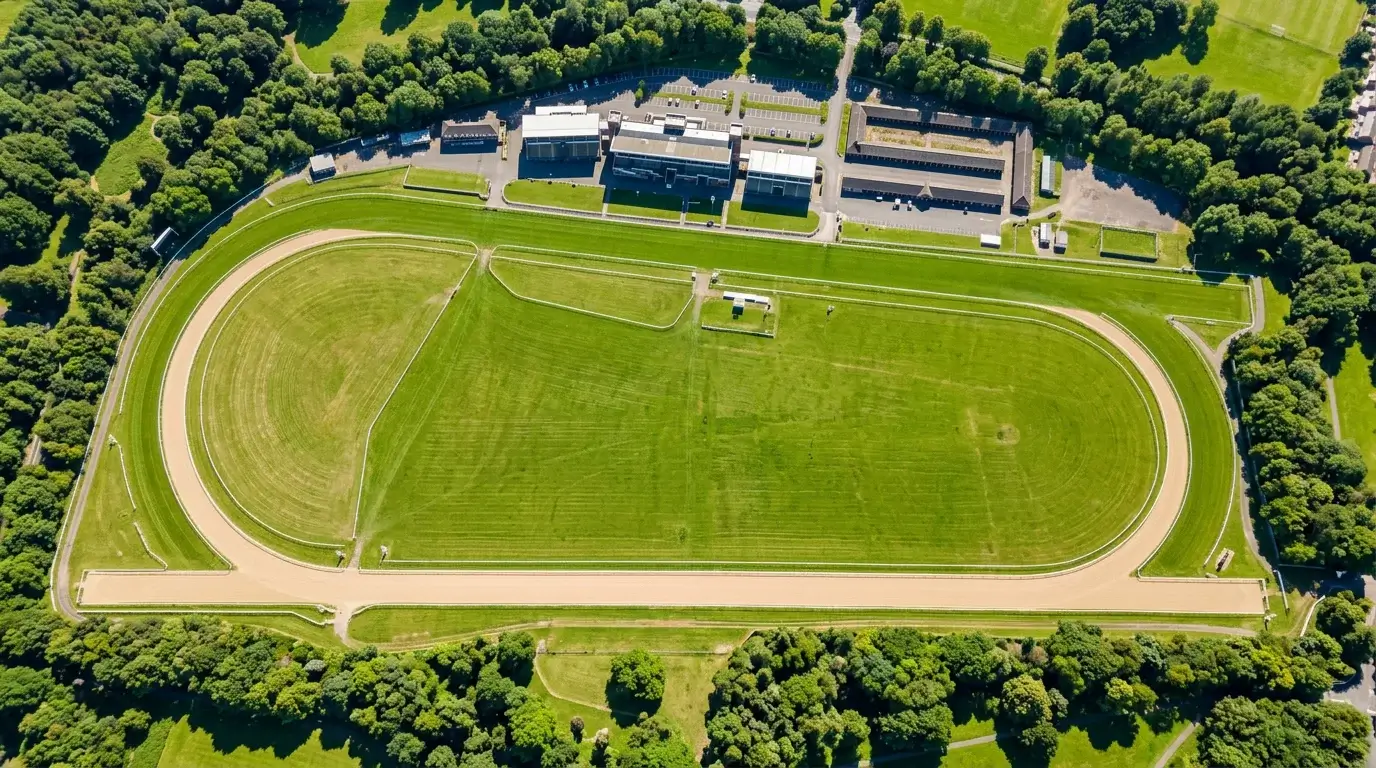
Newcastle Racecourse at Gosforth Park operates a dual-configuration layout that makes it unique among British all-weather venues. The track combines a straight mile course with a left-handed oval circuit of approximately 1 mile 7 furlongs, creating racing opportunities across distances from 5 furlongs to 2 miles on the flat. According to Tapeta Footings, this makes Newcastle the largest synthetic racecourse in the world, a distinction that shapes how racing unfolds here.
Understanding the track layout matters for punters and racegoers alike. Draw positions affect results differently depending on which part of the course is used. Viewing locations vary in quality according to where the action concentrates. The transition points between straight and round-course sections create specific racing characteristics that distinguish Newcastle from simpler configurations elsewhere.
What follows breaks down each element of the course: where races start, how the track rides, and what these factors mean for horses, jockeys, and spectators. The annual programme of 80 to 90 race days exploits this configuration fully, meaning these details apply across hundreds of races each year.
Newcastle Racecourse Map & Track Layout Guide — More on this topic at newcastle horse racing results.
The Straight Course
The straight course extends for one mile, serving races at 5 furlongs, 6 furlongs, 7 furlongs, and the full mile. Starting stalls position at intervals along this straight, with each distance using a different chute. The course runs broadly north to south, with horses finishing toward the grandstand complex.
Starting Positions
The 5-furlong start positions horses at the far end of the straight with the entire track ahead. The 6-furlong chute joins the main straight slightly further along, while the 7-furlong and 1-mile starts step back progressively. Each starting point creates slightly different racing characteristics based on width available and run to the first competitive phase.
Track Characteristics
The straight course rides with a slight uphill gradient toward the finish, though the incline remains gentle enough that true stamina becomes less important than raw speed. The Tapeta surface provides consistent footing without the kickback issues that affect some synthetic tracks, allowing horses to race without eye protection and reducing respiratory stress.
Width varies along the straight, with the course narrowing toward the winning post. This funnelling effect concentrates the field in the final furlong, making late challenges difficult when runners are blocked behind a wall of horses. Jockeys aware of this characteristic position their mounts for clear runs earlier in proceedings rather than gambling on gaps appearing late.
Draw Implications
High draws hold a statistical advantage on the straight course. The standside rails historically underperform, with horses drawn in stalls 1 and 2 recording lower win rates than their odds suggest. This bias emerges from track geometry and possibly from racing patterns where the inside line becomes crowded while outside runners enjoy cleaner runs. Punters who factor draw position into selections gain a measurable edge over those who ignore it.
The Oval Circuit
The round course measures approximately 1 mile 7 furlongs in circumference, running left-handed with sweeping bends rather than tight turns. Races at 1 mile 2 furlongs, 1 mile 4 furlongs, 1 mile 5 furlongs, and 2 miles use this circuit, with starting points positioned to deliver the advertised distances.
Circuit Configuration
Horses run left-handed around bends of relatively gentle radius compared to tighter all-weather tracks like Wolverhampton. This configuration favours balanced gallopers over specialists who excel only when turning sharply in one direction. The bends offer some shelter from prevailing winds, meaning positions relative to rivals matter more than positions relative to the rail during middle sections of races.
The run-in from the final bend to the winning post provides adequate distance for closers to mount challenges without requiring them to make ground through the turn itself. This run-in length suits horses who stay well, allowing them to use superior stamina where track geometry does not force premature efforts.
Starting Chutes
The 1 mile 2 furlong start positions runners on the round course proper, entering the home straight after navigating two bends. The 1 mile 4 furlong chute adds distance by starting further back, while the 2-mile trip requires runners to complete almost the full circuit before finishing. Each starting position creates different early race dynamics based on how soon the field reaches the first bend.
Distance-Specific Bias
At 1 mile 4 furlongs, high draws demonstrate pronounced advantage. Analysis shows horses drawn high win at approximately twice the rate of those drawn low, a bias strong enough to influence betting decisions. The effect relates to the run from the start to the first bend, where high-drawn runners can establish position without losing ground while low-drawn horses must either expend energy racing wide or accept inferior positions.
Key Course Features
Winning Post and Grandstand
The winning post sits in front of the main grandstand, providing spectators with clear views of finishes for both straight and round course races. The grandstand’s elevated positioning allows sightlines across the straight mile and around much of the oval, though the far side of the round course inevitably appears distant from fixed viewing positions.
Photo finish equipment positions near the winning post, capturing decisive images for close results. The system at Newcastle employs modern digital technology that produces instant results for minor separations while allowing stewards to examine controversial finishes frame by frame.
Parade Ring and Pre-Race Areas
The parade ring sits adjacent to the grandstand complex, allowing spectators to examine horses before racing. This area provides opportunities to assess physical condition, temperament, and how horses handle the pre-race atmosphere. Horses who sweat excessively or refuse to settle may be using energy better conserved for racing.
Facilities Layout
The betting ring operates near the grandstand base, with on-course bookmakers offering prices throughout the card. The ring provides price comparison opportunities against exchange rates, occasionally revealing value where on-course layers offer marginally better odds to attract business. Tote windows distribute throughout the enclosures for pool betting access.
Viewing areas extend along the home straight rails, where dedicated punters stand regardless of weather to watch races unfold at close range. These positions sacrifice the overview that elevated grandstand seating provides but deliver the atmosphere of horses passing at full speed.
The Jump Course
Newcastle’s National Hunt track operates on turf rather than Tapeta, using a separate course configuration that shares some ground with the all-weather oval but maintains distinct characteristics. The jump season runs from late October through early April, with hurdle and chase races forming a significant portion of the winter programme.
Hurdle Layout
The hurdle course runs left-handed with flights positioned at standard intervals. The track rides with typical winter ground variations, ranging from good to soft depending on rainfall and drainage. Horses need different attributes here than on the all-weather: handling cut in the ground matters, and jumping proficiency separates contenders from also-rans.
Chase Course
The chase course features regulation fences including open ditches and plain fences. The Eider Chase over four miles tests jumping stamina to an extent few British courses match, with the extended distance demanding both accuracy and courage from runners. The fences ride fairly without particular eccentricities that favour specialists.
Differences from Flat Racing
Jump racing at Newcastle attracts different trainers and horses than the all-weather flat programme. Northern National Hunt yards dominate local fixtures, with fewer southern raiders making the journey unless targeting feature races like the Fighting Fifth Hurdle. Draw position becomes irrelevant over obstacles, replaced by jumping ability, trip preference, and ground suitability as selection criteria.
For punters, the transition between codes requires mental adjustment. Form reading changes, with obstacles adding unpredictability that flat racing lacks. Course-and-distance form retains value, but a horse’s jumping record matters as much as its finishing positions.
Using Track Knowledge
The Newcastle layout creates specific advantages for those who understand its characteristics. Draw biases on the straight and at 1 mile 4 furlongs offer genuine edges. The distinction between all-weather flat racing and turf jump racing demands different analytical approaches. Viewing positions and facilities knowledge improves the raceday experience for those attending.
This track layout operates across the full annual programme. The factors described here apply consistently whether you engage with a routine Tuesday evening card or a feature Saturday meeting. Building familiarity with these elements converts into better selections and more informed racegoing over time.
See also Watch Newcastle Racing Live.
