
 Available in US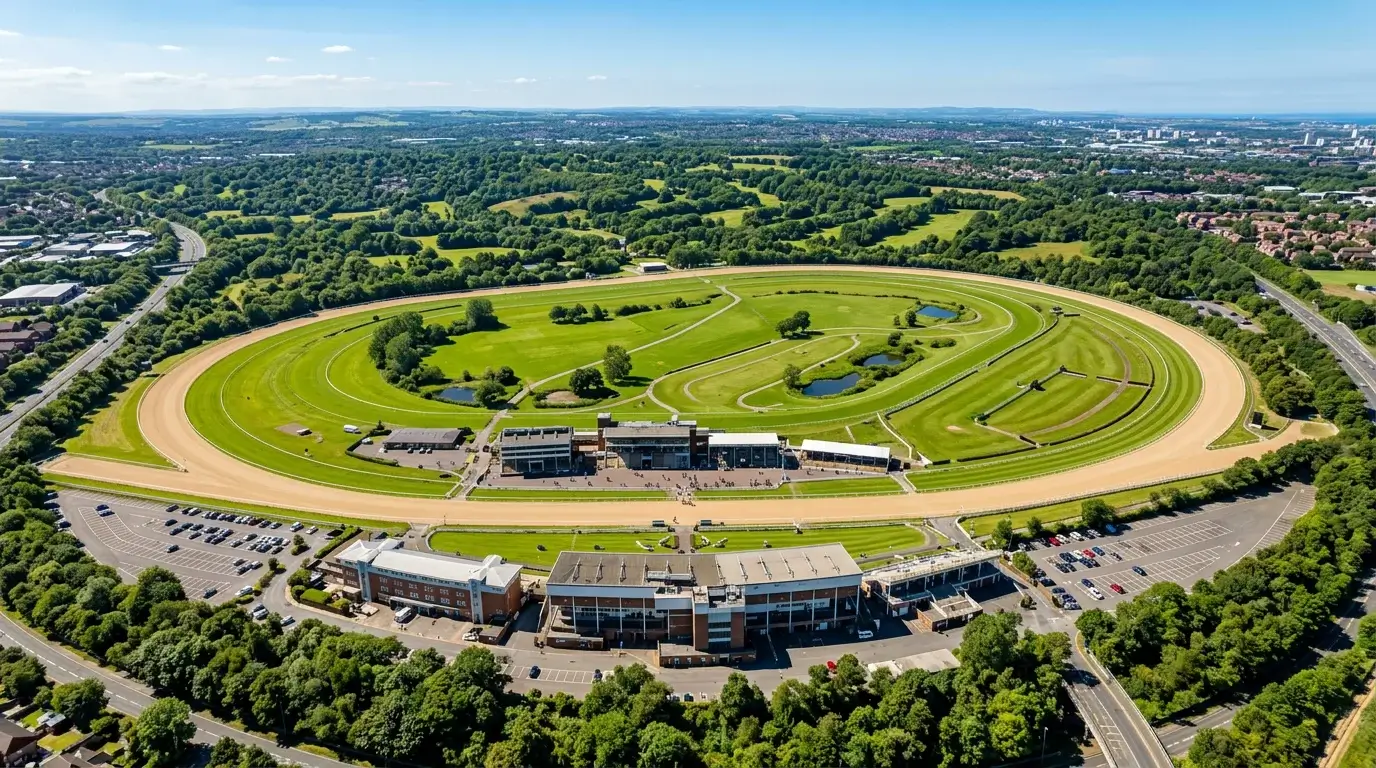
Britain operates two Tapeta racecourses: Newcastle and Wolverhampton. Both feature the same synthetic surface material, yet they produce markedly different racing experiences. Understanding these differences — configuration, bias patterns, pace scenarios — helps bettors assess form transfer and identify horses whose profiles suit one venue over the other.
The Tapeta connection tempts assumption that form translates seamlessly between tracks. Reality proves more nuanced. Newcastle installed Tapeta in 2016, Wolverhampton in 2014, making the latter’s surface marginally more established, though both now race consistently. Surface chemistry might match, but track geometry differs substantially — and geometry shapes racing more than surface composition alone.
Newcastle ranks as the largest synthetic racecourse in the world, its straight mile and expansive oval circuit creating a galloping track that rewards stamina and sustained pace. Wolverhampton’s tight left-handed configuration suits different attributes entirely. Same surface, different courses, distinct form profiles — the comparison rewards examination.
Newcastle vs Wolverhampton — More on this topic at newcastle horse racing results.
Track Configurations Compared
Track layout fundamentally shapes racing character. What works at Newcastle often fails at Wolverhampton, and vice versa. Understanding these geometric differences provides the foundation for meaningful form comparison.
Newcastle: The Galloping Track
Newcastle features two distinct racing experiences on a single surface. The straight mile — a rarity among British all-weather tracks — allows pure speed tests without the positional complications bends create. Runners break from stalls, establish positions, and race in line toward the finish. Tactical racing gives way to ability assessment.
The oval circuit measures approximately one mile and seven furlongs, its sweeping bends and long straights creating galloping conditions. Races beyond a mile utilise this circuit, which favours horses who stride out fluently rather than quickening sharply around turns. The undulations are gentle; the camber fair; the overall character suits stamina alongside speed.
Wolverhampton: The Tight Turner
Wolverhampton operates entirely on a left-handed oval measuring approximately one mile around — substantially tighter than Newcastle’s circuit. The bends come frequently, demanding balance and the ability to maintain momentum through turns that test less agile runners.
This configuration creates a different racing rhythm. Positions matter more; tracking a tiring leader through Wolverhampton’s turns requires different skills than sustaining effort on Newcastle’s straights. Front-runners face constant pressure from horses saving ground on the inner; those racing wide around bends concede meaningful distances.
Distance Variations
Both tracks offer racing from five furlongs upward, but distance experiences differ. Wolverhampton’s tight turns make its mile races feel shorter than Newcastle’s — the constant directional changes compress the action. Conversely, Newcastle’s stamina-testing configuration makes its extended distances feel appropriately demanding. A horse comfortable over ten furlongs at Wolverhampton might find Newcastle’s equivalent trip more searching.
Draw Bias Comparison
Draw bias differs substantially between tracks, with stall positions affecting outcomes through distinct mechanisms. Appreciating these differences helps bettors adjust expectations based on where horses start.
Newcastle Draw Patterns
Newcastle’s straight-course racing shows consistent high-draw advantage over sprints. Horses breaking from stalls nine or higher outperform lower-drawn rivals statistically, the far-side rail providing some subtle benefit across five and six furlong trips. This pattern persists across seasons, suggesting structural rather than coincidental causes.
On the round course, draw effects vary by distance. Races over one mile and four furlongs show particularly strong high-draw bias, with higher-numbered stalls winning at roughly twice the rate of low draws. The first turn’s positioning requirements seem to favour horses with clearer paths on the outside, even accounting for the extra ground covered.
Wolverhampton Draw Patterns
Wolverhampton’s tighter turns create different bias dynamics. Low draws show advantages over shorter distances, where early position on the rail matters more than at spacious Newcastle. The first bend arrives quickly, and horses drawn wide must use energy establishing position that inside-drawn runners conserve.
Over longer trips, Wolverhampton’s bias moderates. The extended distances allow repositioning opportunities that mitigate starting disadvantages. Stamina becomes the limiting factor rather than tactical positioning, levelling the draw’s influence as races progress.
Practical Implications
A horse drawn badly at one track might draw well at the other. Newcastle’s high-draw bias means a horse repeatedly facing low draws at Gosforth Park might find relief at Wolverhampton, where that same draw position confers advantage. Checking draw histories across both venues reveals whether poor recent form reflects ability or allocation.
Form Transfer Between Tracks
Does Newcastle form predict Wolverhampton success? The shared surface suggests it should, yet track configuration differences complicate direct translation. Analysing form transfer reveals which performance aspects travel between venues.
Surface Consistency
Tapeta produces similar going at both tracks — typically Standard, occasionally described as Slow or Fast depending on weather and maintenance. Horses who handle the surface at one venue generally handle it at the other; surface-specific preferences rarely distinguish the two. A horse struggling on Tapeta at Newcastle will likely struggle at Wolverhampton too.
This surface consistency means form figures remain meaningful across venues in ways they might not when comparing Tapeta tracks to Polytrack venues like Lingfield or Kempton. The material’s behaviour matches; only configuration differs.
What Transfers Well
Stamina transfers reliably. A horse proven over twelve furlongs at Newcastle possesses genuine staying power applicable anywhere. Similarly, basic speed figures — sectional times, overall race times — provide comparable data across venues. A horse running quick times at Wolverhampton can run quick times at Newcastle.
Consistency transfers too. Horses who hit the frame repeatedly at one venue tend toward similar reliability at the other. The surface suits their action; only track configuration creates differences in exact finishing positions.
What Doesn’t Transfer
Tactical racing style often fails to transfer. A horse who excels at Wolverhampton through sharp turns and well-timed challenges may find Newcastle’s galloping track exposes limitations. Conversely, a Newcastle specialist used to sustained efforts might get outpaced through Wolverhampton’s turns.
Draw-dependent form transfers poorly. A horse whose Wolverhampton success came from inside draws may struggle at Newcastle where high draws confer advantage. Stripping draw effects from form analysis — assessing what horses achieved independent of stall position — reveals more transferable ability measures.
Which Track Suits Which Horse
Certain horse profiles suit each track distinctly. Identifying these preferences before betting — rather than discovering them through expensive losing bets — provides genuine analytical edge.
Newcastle Specialists
Galloping types thrive at Newcastle. Horses with long, economical strides who maintain pace over extended distances find the sweeping track suits their action. These runners often struggle at tighter tracks where their stride length becomes a liability around bends.
Genuine stayers perform relatively better at Newcastle than Wolverhampton. The track’s stamina demands expose horses who merely stay a trip rather than truly relish it. Extended handicaps over twelve furlongs or further at Newcastle require authentic staying power; Wolverhampton’s tighter configuration allows less stamina-laden types to complete equivalent distances through tactical efficiency.
Wolverhampton Specialists
Handy, agile types excel at Wolverhampton. Horses who quicken sharply, maintain balance through turns, and respond to tactical challenges suit the track’s demands. These aren’t necessarily inferior to Newcastle specialists — they’re differently configured, their strengths matching different requirements.
Front-runners often find Wolverhampton’s tight turns protective. Establishing early position and dictating pace allows them to control races through sections where passing proves difficult. The same front-runners at Newcastle might find the galloping track allows closers too much time and space to organise challenges.
Dual-Track Performers
Some horses handle both configurations. These tend toward versatility in racing style — able to make pace or come from behind, comfortable at various distances, physically balanced enough to handle both tight turns and sweeping bends. Identifying such versatile types provides betting opportunities whenever they appear at either venue.
Choosing Your Battles
Newcastle and Wolverhampton share Tapeta but differ in almost everything else. Configuration, draw bias, pace dynamics, and suitable horse profiles all diverge despite the surface connection. Understanding these differences transforms form analysis from surface-level assumption into genuine insight.
The practical implication for bettors: form at one venue doesn’t automatically translate to the other. Assess which track characteristics created each performance. A horse winning at Wolverhampton through tactical excellence might flounder at Newcastle; one dominating Newcastle’s galloping straight might struggle through Wolverhampton’s bends. Same surface, different races — and different betting conclusions.
See also Newcastle Racing Terminology.
