
 Available in US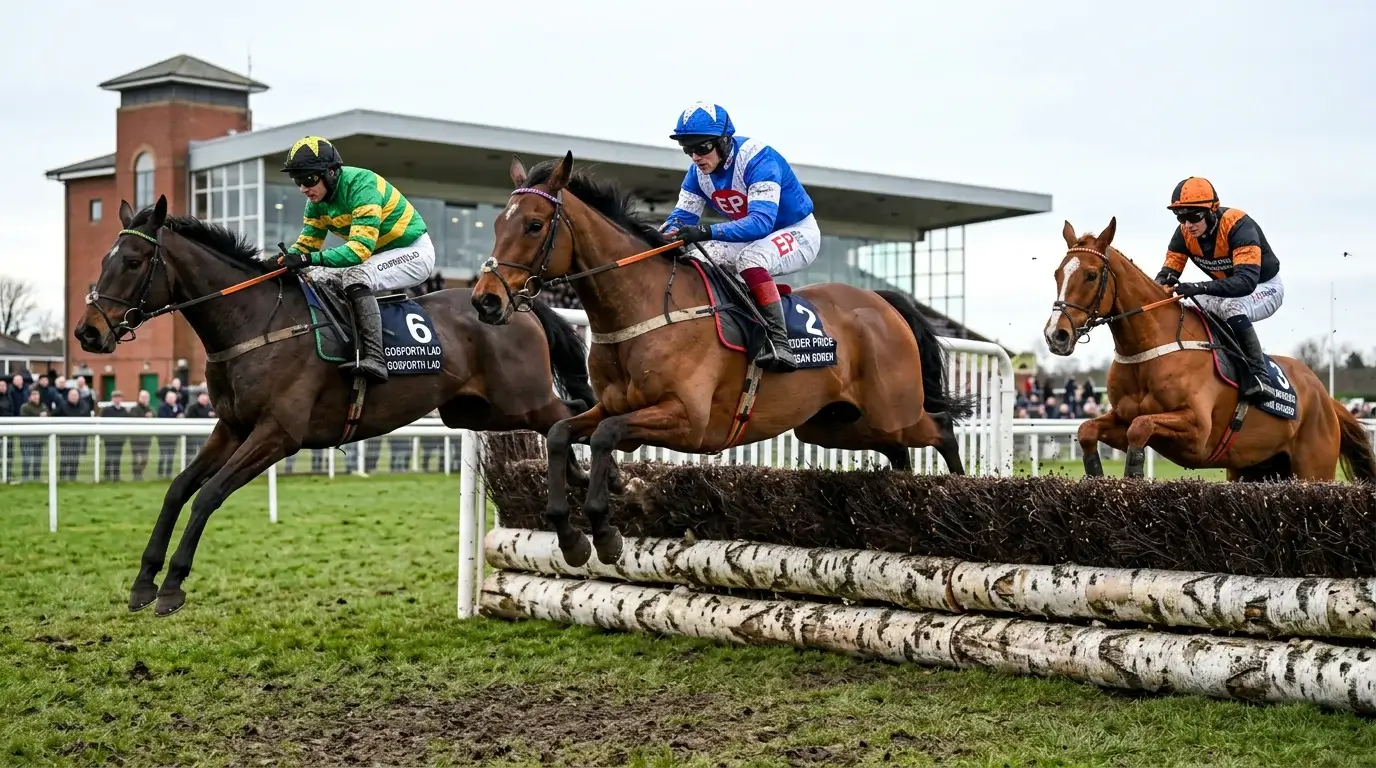
The Eider Chase stands as Newcastle’s premier staying chase, a four-mile marathon that tests stamina in ways few British races can match. Run in February, it serves as a recognised Grand National trial, attracting horses whose connections harbour Aintree ambitions. The race demands more than speed or jumping accuracy. It demands the will to keep galloping when lungs burn and legs tire over the final gruelling mile.
Jump racing faces particular challenges with British weather. According to BHA data, 32 fixtures were abandoned in the first half of 2025, with 30 of those being National Hunt meetings lost to unsuitable conditions. The Eider’s February scheduling places it in this vulnerable window, yet the race’s prestige ensures it proceeds when conditions allow, drawing field sizes that reflect its importance in the staying chase calendar.
For punters and racing enthusiasts, the Eider offers a distinctive betting proposition where conventional form analysis must accommodate the extreme distance. What follows examines the race in detail, from its historical significance to practical betting considerations.
Eider Chase Newcastle — More on this topic at newcastle horse racing results.
Race Profile
The Eider Chase runs over approximately four miles, making it one of the longest races in the British National Hunt calendar outside the Grand National itself. The distance sorts horses ruthlessly, with only those possessing genuine stamina reserves able to finish competitively. Speed specialists who thrive over shorter trips find themselves exposed as the race progresses, unable to sustain the effort required.
Race Conditions
The race operates as a handicap, meaning horses carry different weights based on their official ratings. This format creates competitive, open contests where well-handicapped horses can upset more fancied rivals. Field sizes typically range from 10 to 18 runners, with the handicap conditions ensuring most have legitimate chances on paper.
Prize money positions the Eider as a significant target for National Hunt trainers, particularly those with stayers who need experience over extreme distances before potential Grand National campaigns. The purse attracts quality entries without reaching the levels that would exclude genuine handicappers.
Why Grand National Types Target It
The Eider’s distance and fencing demands mirror much of what horses face at Aintree. While Newcastle’s fences differ from Liverpool’s famous spruce obstacles, the test of jumping stamina translates directly. Trainers use the Eider to assess whether horses can complete four miles while still racing competitively, a question the Grand National will ask in even more demanding circumstances.
Horses who struggle in the Eider rarely succeed at Aintree. Those who win or run prominently often progress to respectable Grand National performances, making the race valuable for both preparation and form assessment.
Course Requirements
Newcastle’s chase course demands accurate jumping without particular idiosyncrasies. The fences ride fairly, but the cumulative effect of jumping 20-plus obstacles over four miles exposes any jumping weaknesses. Horses need to be economical at their fences, wasting no energy on extravagant leaps or recovery from errors.
History and Heritage
The Eider Chase takes its name from the eider duck, a species associated with the Northumberland coastline. This local connection reflects Newcastle Racecourse’s identity as a venue deeply rooted in its region, hosting races that matter to northern racing communities even as they attract national attention.
The race has established itself as the north’s primary staying chase, filling a calendar niche that brings quality National Hunt racing to Gosforth Park during winter months. While lacking the Grade 1 status of the Fighting Fifth Hurdle, the Eider commands respect as a trial that has identified future Aintree performers repeatedly over the decades.
Notable Past Winners
The Eider roll of honour includes horses who went on to Grand National success or placed efforts. These connections validate the race’s status as genuine trial rather than mere long-distance handicap. Trainers who have won the Grand National often point to races like the Eider as crucial steps in their horses’ development.
The race has also produced specialists who returned year after year, their records at Newcastle demonstrating the value of course experience over extreme distances. These repeat performers illustrate how Eider success requires specific attributes that some horses possess while others do not, regardless of overall ability.
Evolution
The Eider has maintained its character across decades of British racing’s evolution. While prize money has increased and media coverage has expanded, the essential test remains unchanged: four miles over fences in February conditions. This consistency makes historical form comparisons meaningful in ways that apply less reliably to races whose formats have shifted repeatedly.
Past Winners
Examining recent Eider Chase winners reveals patterns that inform future betting. The race tends to favour horses with proven stamina credentials over those attempting the distance for the first time. Previous completion of four miles, or at least a strong performance over 3 miles 5 furlongs or longer, appears regularly in winner profiles.
Trainer Patterns
Northern trainers dominate Eider Chase statistics, their proximity to Newcastle enabling targeted preparation and regular course experience for their staying chasers. Yards based in Yorkshire, County Durham, and Scotland feature prominently among recent winners, though southern raiders occasionally succeed when bringing genuine quality to the race.
Certain trainers demonstrate particular affinity for the race, returning year after year with well-prepared candidates. Identifying these Eider specialists adds useful context when assessing declarations, as their runners typically arrive with specific preparation for the unique demands ahead.
Jockey Success
Jockey experience over extreme distances matters in the Eider. Riders who understand pace judgement over four miles, knowing when to conserve energy and when to commit, outperform those treating it as merely a longer version of shorter chases. Regular Eider participants include jockeys whose records over similar distances elsewhere confirm their expertise in this specialised area.
Favourite Performance
Market favourites face a challenging record in the Eider. The handicap format and extreme distance combine to produce open results where well-handicapped outsiders frequently outrun expectations. This pattern suggests each-way approaches rather than win-only backing of market leaders, with the place terms offering protection when fancied horses find four miles beyond their stamina reserves.
Betting Angles
Betting the Eider Chase requires adjustment from standard National Hunt race analysis. The extreme distance amplifies certain factors while diminishing others.
Stamina First
Prioritise proven stamina above all else. Horses who have won or placed over three miles six furlongs or further deserve serious consideration. Those attempting four miles for the first time face a significant unknown regardless of their form over shorter trips. The benefit of the doubt should go to experience in these conditions.
Weight Considerations
Weight impacts horses more over extreme distances. The burden of top weight accumulates through four miles in ways that might be manageable over shorter trips. Horses at the foot of the handicap, carrying lighter weights, often outperform their odds when stamina holds out. However, the lowest weights sometimes reflect genuine limitations, so balance weight advantage against evidence of actual staying power.
Course Experience
Previous runs at Newcastle, particularly over the chase course in similar conditions, provide valuable insight. Horses comfortable with the track’s fences and configuration hold an edge over newcomers who must assess unfamiliar obstacles while racing at the edge of their stamina.
Ground Sensitivity
February ground at Newcastle typically rides soft or heavy, demanding additional effort through each stride. Horses with demonstrated preferences for testing ground suit these conditions, while those whose best form comes on better ground may struggle to translate that ability into Eider success.
The Eider in Context
The Eider Chase occupies a unique position in the National Hunt calendar: a marathon test in February that identifies horses capable of the even greater demands ahead at Aintree. For Newcastle Racecourse, it represents one of the year’s premier jump racing occasions, drawing crowds who appreciate the spectacle of horses and jockeys at the limits of their endurance.
Whether attending in person or following remotely, the Eider rewards understanding of what extreme distance demands. The factors outlined above provide a framework for assessment that applies year after year, regardless of which specific horses contest each renewal. When February arrives and the Eider field assembles, you will know what to look for.
See also Newcastle All-Weather Championships.
