
 Available in US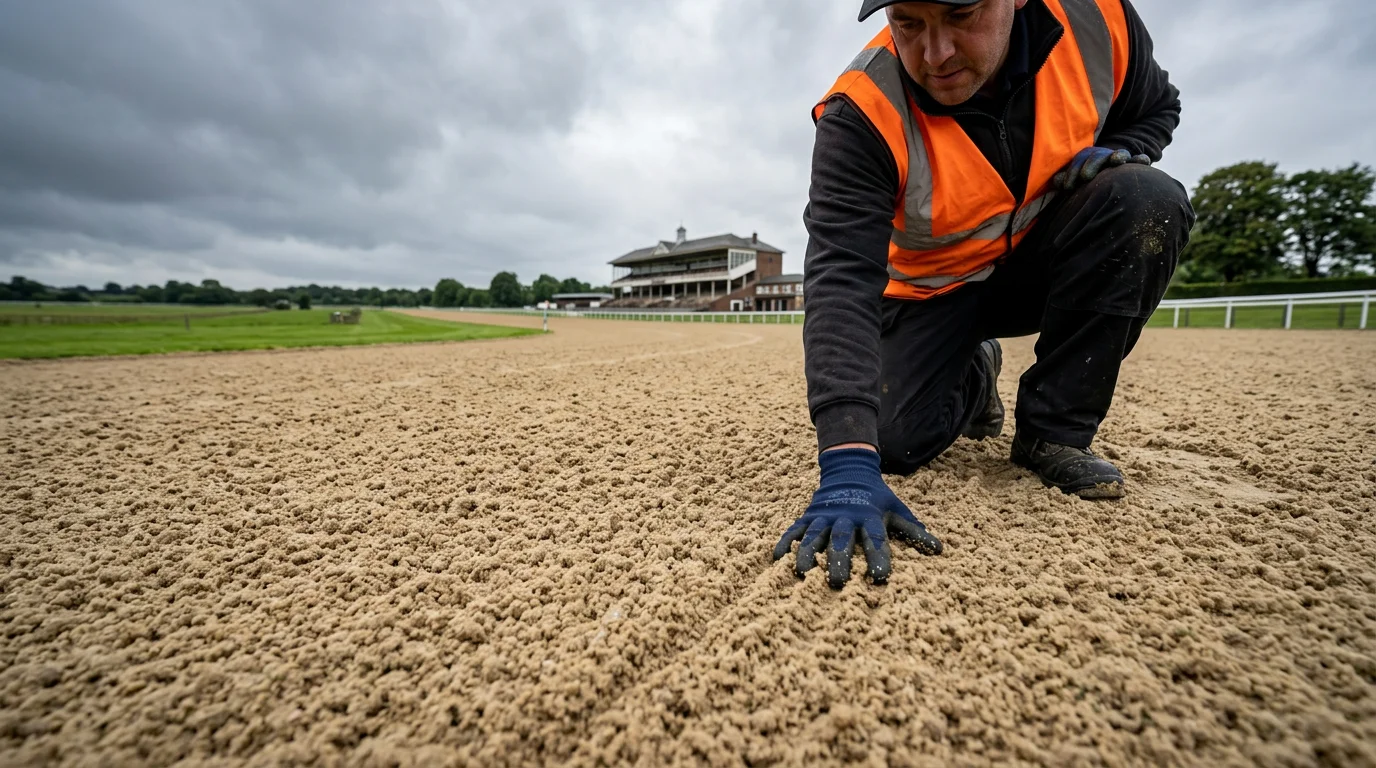
The going report at Newcastle describes track conditions in terms that differ from turf racing terminology. Where grass courses use descriptions ranging from heavy through good to firm, all-weather surfaces including the Tapeta at Gosforth Park employ their own scale centred on “standard” as the baseline. Understanding this terminology helps interpret official reports and assess how conditions might affect individual horses.
Newcastle operates the largest synthetic racecourse in the world, combining a straight mile with a 1 mile 7 furlong oval circuit. The Tapeta surface was installed in 2016, replacing the previous Fibresand track. Research indicates that horses on Tapeta experience approximately 50% less concussion impact compared to dirt surfaces, contributing to the track’s safety record alongside its consistent racing characteristics.
The going report appears deceptively simple, typically consisting of just one or two words. Extracting useful information requires understanding what those words mean, how conditions change, and which horses benefit from different surface states.
Newcastle Going Report — More on this topic at newcastle horse racing results.
The Tapeta Going Scale
All-weather going descriptions use a simplified scale compared to turf racing. The terminology reflects how the surface plays rather than moisture content or firmness in the traditional sense.
Standard
Standard represents the default condition for Tapeta racing. The surface provides consistent footing without favouring particular running styles. Most Newcastle fixtures take place on standard going, as the surface’s construction maintains this state across a wide range of weather conditions. When the going report simply states “standard,” expect typical racing where form transfers reliably and no particular adjustments are needed.
Standard-to-Slow
After significant rainfall or during periods of heavy use, the surface can shift toward standard-to-slow. This condition provides slightly more give underfoot, requiring horses to work marginally harder through each stride. Stamina becomes more important on slower ground, favouring horses who stay their trip strongly and disadvantaging those who rely on quick acceleration.
Standard-to-slow conditions also affect times. Races run slower than standard, meaning pace analysis from previous fixtures requires adjustment. A horse that clocked fast sectionals on standard may appear to run slower times on standard-to-slow without any actual decline in ability.
Standard-to-Fast
During dry spells or when the track has received particular maintenance, conditions can shift toward standard-to-fast. The surface provides slightly firmer footing, rewarding horses with quick turnover and early speed. Front-runners often benefit from fast conditions, establishing leads that prove harder to peg back when the ground helps maintain momentum.
Fast ground can expose horses who struggle with the jarring effect of firmer footing. While Tapeta remains kinder than fast turf, some horses still show clear preferences for give in the ground and perform below expectations when conditions quicken.
Maintenance Effects
Track maintenance influences going regardless of weather. Harrowing loosens the surface, while rolling compacts it. The timing of maintenance relative to racing affects how the track rides. Early races on a freshly harrowed track may ride differently than later races after the surface has bedded in under traffic.
Reading the Going Report
Official Sources
The official going report comes from the clerk of the course, typically published the evening before racing and updated on race day morning. Racing Post, At The Races, and the Newcastle Racecourse website all display this information. The report represents an official assessment that jockeys and trainers rely upon when making tactical decisions.
Updates occur throughout race day if conditions change. Rain during racing prompts reassessment, as does observation of how horses are moving during early races. The going stick, a measuring device that quantifies ground penetration and shear, provides objective data supplementing the clerk’s visual assessment.
Rail Movements
Going reports sometimes note rail positions, indicating whether the running rail has been moved from its standard position. Rail movements alter the ground horses race over, potentially providing fresher surface away from the usual racing line. When rails are moved out, horses drawn high on the straight course may find themselves on ground that has seen less traffic, potentially offering a slight advantage.
Interpreting Non-Runner Reasons
When trainers withdraw horses citing unsuitable going, this provides indirect information about conditions. Multiple withdrawals for going reasons suggest the track is riding toward one extreme or the other, even when the official description seems moderate. Trainers know their horses and act on assessments that may detect nuances the official report does not fully capture.
Morning Inspections
Severe weather occasionally prompts morning inspections to determine whether racing can proceed. While rare on all-weather surfaces, extreme frost or waterlogging can affect even Tapeta tracks. When inspections are announced, monitor official channels for outcomes, as abandonment or delayed starts affect planning significantly.
Betting Implications
Matching Horses to Conditions
Some horses show clear going preferences even on all-weather surfaces. Review previous runs to identify patterns: does a horse consistently run better when conditions are described as standard-to-fast versus standard-to-slow? This information may not appear obviously in form comments but emerges from systematic comparison of performances under different conditions.
Trainers often know which conditions suit their horses and wait for appropriate going before running. When a trainer has held a horse back through several fixtures and then declares for a meeting where conditions shift in a particular direction, the timing likely reflects targeted placement rather than coincidence.
Pace Implications
Going affects pace scenarios significantly. Faster ground enables quicker fractions, meaning front-runners can establish and maintain leads more easily. Slower ground encourages closers, as leaders tire more readily when each stride requires greater effort. Assessing likely pace given the going helps predict how races will unfold.
The combination of going and draw bias creates compound effects. On fast ground with high draws advantageous, a speed horse drawn wide may enjoy multiple factors working in its favour simultaneously.
Market Adjustments
Markets respond to going changes, though not always efficiently. Sharp bettors monitor going updates and act quickly when conditions shift toward a horse’s preferences. Getting positions before markets fully adjust provides value. By the time official updates appear on major sites, much of the adjustment has often occurred, making early information valuable.
Trainer Preferences
Certain trainers demonstrate preferences for particular going conditions. Some consistently run horses on slower ground, their training methods producing horses suited to that surface state. Others target fast ground periods. Learning these trainer tendencies adds another layer to going-based analysis.
Historical Patterns
Going conditions at Newcastle follow seasonal patterns that help predict likely states for future fixtures.
Seasonal Trends
Winter months see more standard-to-slow readings as rainfall increases and temperatures drop. The Tapeta drains efficiently, preventing the waterlogging that closes turf courses, but moisture still affects how the surface rides. Summer fixtures more commonly produce standard or standard-to-fast conditions, particularly during dry spells.
Evening meetings through summer often ride faster than afternoon fixtures, as the sun has dried any morning moisture and the track has not yet experienced heavy use. This pattern is subtle but detectable over sufficient sample sizes.
Consistency Advantage
Compared to turf racing, Newcastle’s all-weather surface provides relatively consistent going throughout the year. Dramatic shifts from one extreme to another occur rarely. This consistency means horses proven on the track tend to reproduce their form more reliably than at turf venues where ground conditions vary enormously between fixtures.
Record Keeping
Maintaining personal records of going conditions at Newcastle fixtures you follow allows pattern identification over time. Note the official going, any changes during the day, and how specific horses performed. This database becomes increasingly valuable as it grows, revealing relationships that general form resources do not highlight.
Integrating Going Analysis
Going analysis at Newcastle requires less adjustment than at turf courses, where conditions range dramatically across seasons. The all-weather surface maintains relative consistency, making form comparison more straightforward. When conditions do shift toward slow or fast, the effects remain more predictable than the equivalent movements on grass.
Check the going report before finalising selections, noting any changes from declarations to race time. Factor conditions into pace analysis and draw bias considerations. Build awareness of which horses in your analysis have demonstrated going preferences on previous runs. These elements combine into a complete picture that improves the accuracy of your race assessments throughout the Newcastle calendar.
See also Eider Chase Newcastle.
