
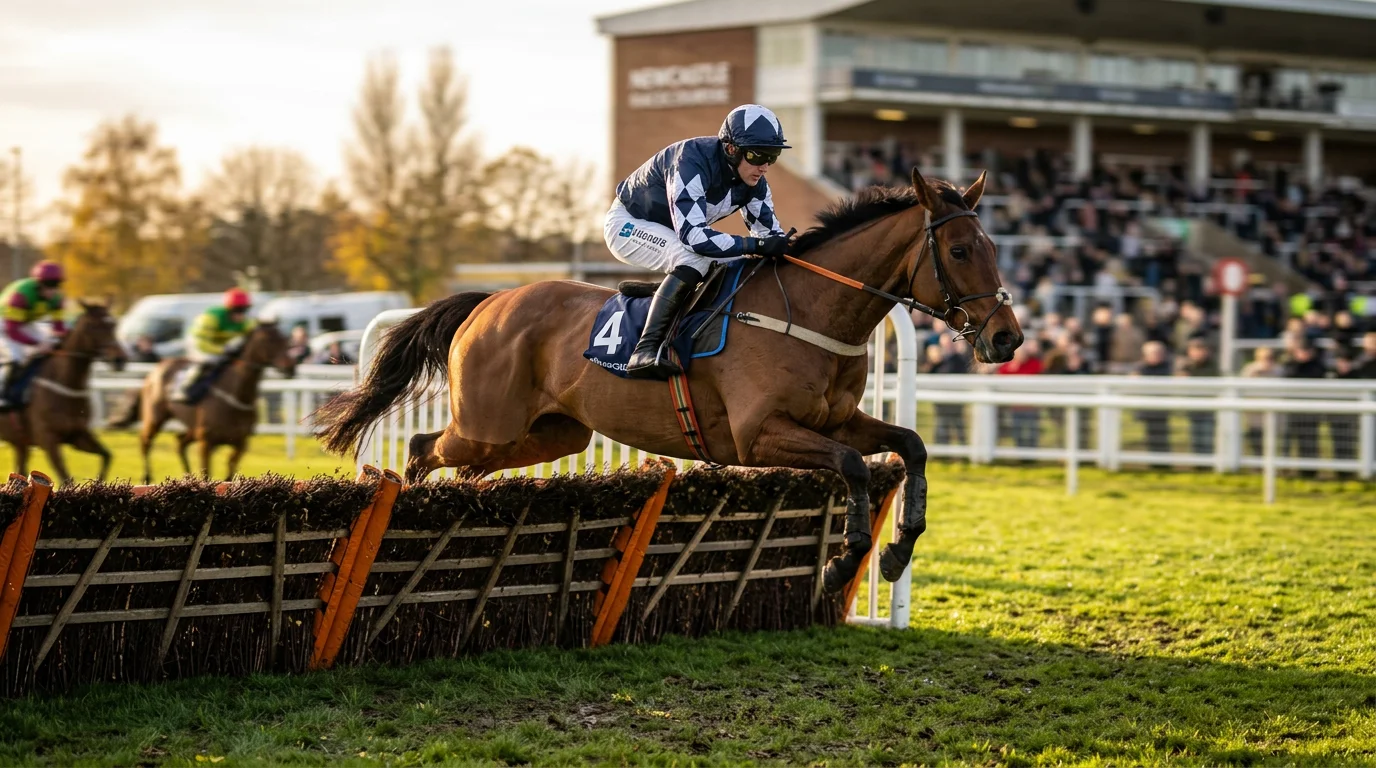
The Fighting Fifth Hurdle arrives each November like a starting gun for the National Hunt season proper. While jump racing officially begins earlier in the autumn, this Grade 1 contest at Newcastle represents the moment when serious Champion Hurdle contenders declare their intentions. Two miles over hurdles against elite company separates genuine stars from pretenders who flourished against weaker opposition. The race has earned its reputation as British racing’s most reliable two-mile hurdle trial, and trainers treat it accordingly.
Newcastle might seem an unlikely venue for such significance. The northeast racecourse sits far from the Cotswolds heartland of National Hunt racing, far from the training centres that dominate the weighing room. Yet that northern location creates opportunity: a Grade 1 hurdle without Cheltenham’s transport complications, staged when weather conditions generally cooperate, on a track that tests jumping ability without asking questions beyond a horse’s capacity to answer. The Fighting Fifth has thrived precisely because it offers top-class racing without unnecessary complications.
Understanding this race matters for anyone following the jumps season. The Fighting Fifth winner typically becomes Champion Hurdle favourite, or at minimum confirms that status for a horse already heading the market. Form lines established here thread through the entire hurdling campaign, connecting November performances to March outcomes. This guide examines how the race works, who has dominated it, and what edges exist for punters willing to study beyond the obvious.
Race Profile
The Fighting Fifth Hurdle runs over two miles at Newcastle, the standard championship distance for hurdlers. Eight flights of hurdles test jumping technique while the flat terrain emphasises speed over stamina. The race typically attracts small but select fields — five to eight runners most years — because few horses possess both the quality and the readiness for Grade 1 competition this early in the season. Field size reflects exclusivity rather than lack of interest.
Grade 1 status was granted in 2004, elevating the race from its previous Grade 2 classification. That upgrade recognised what participants already knew: the Fighting Fifth attracted top hurdlers regardless of its official designation, and the formalities should reflect reality. The elevation placed Newcastle’s feature hurdle alongside the likes of the Christmas Hurdle and Aintree Hurdle in the hierarchy of two-mile championship events.
Prize money sits appropriately for British Grade 1 standards, sufficient to attract the best without competing with Cheltenham’s purses. The real value lies in what winning proves: that a horse handles Grade 1 pressure, travels well fresh, and possesses the class to compete when it matters most. Champion Hurdle campaigns often launch from this race, making it worth far more than its prize fund suggests.
Conditions favour horses at or near their peak. The race asks immediate questions: can you jump at pace against quality opposition, sustain your speed through the final quarter mile, and deliver when pressed? Horses who lack fitness or need racing to sharpen miss out here. The Fighting Fifth rewards those who arrive ready, which explains why certain trainers dominate — their preparation methods produce early-season sharpness that others cannot match.
The track configuration suits front-runners and prominent racers more than hold-up horses. Newcastle’s hurdles course allows smooth progress throughout, without the undulations or sharp bends that disrupt rhythm. Horses who travel kindly in the early stages, conserving energy while maintaining position, can unleash finishing speed in the final half mile. Those who need to come from behind face the challenge of making ground on quality opposition that rarely stops.
Weight-for-age terms apply rather than handicapping, meaning horses carry set weights based on their age without adjustment for ability. This levels the playing field between older established stars and younger improvers, with the best horse on the day winning regardless of artificial constraints. The conditions suit genuine championship contenders rather than handicap specialists seeking penalty-free opportunities.
History and the Name
The Fighting Fifth Hurdle takes its name from the Fighting Fifth Regiment, officially the Northumberland Fusiliers, one of the oldest infantry regiments in the British Army. The regiment earned its nickname during the Peninsular War, when the Fifth Foot demonstrated particular tenacity in combat. That military heritage connects the race to northeast England’s broader cultural identity — a region that has supplied soldiers, miners, shipbuilders, and other workers whose collective toughness shaped local character.
The race itself predates the Grade 1 era by decades, run initially as a condition hurdle before earning Listed status and then Grade 2 recognition. Each upgrade reflected growing prestige: trainers increasingly targeted the race, quality horses appeared, and the Fighting Fifth became established as a genuine championship indicator rather than a useful prep race. The 2004 elevation to Grade 1 formalised what the weighing room already accepted.
Newcastle’s position as a major National Hunt venue might surprise those who associate the track primarily with all-weather flat racing. Jump racing has featured at Gosforth Park since the course’s establishment, and the Fighting Fifth represents the pinnacle of that parallel tradition. The track’s facilities accommodate both codes, with the hurdles course distinct from the Tapeta surface used for flat racing. This dual-purpose design makes Newcastle economically viable year-round while preserving important races like the Fighting Fifth within the calendar.
Historical significance extends beyond racing into regional pride. The northeast has produced multiple Champion Hurdle winners, and local followers take particular interest in how Fighting Fifth form translates to Cheltenham. When a locally-trained horse wins here, the achievement resonates beyond mere sporting success. The race belongs to a tradition that connects contemporary jump racing to centuries of equestrian culture in Northumberland and Durham.
The November timing has remained constant through decades of calendar reorganisation. Jump racing authorities have shuffled fixtures repeatedly, moving races between weekends and repositioning features within the season’s flow. Yet the Fighting Fifth retains its late-autumn position, understood to serve a purpose that earlier or later dates couldn’t fulfil. That stability reflects the race’s established role as a championship opening statement.
Nicky Henderson’s Dominance
No trainer has shaped the Fighting Fifth’s modern identity like Nicky Henderson. His nine victories in the race represent an almost absurd dominance, achieved across different decades with different horses but unified by a single training philosophy: have them ready early. Henderson’s Seven Barrows operation produces horses capable of peak performance in November, when rivals might still be working toward spring targets. That early-season sharpness translates directly into Fighting Fifth success.
The roll call of Henderson’s winners reads like a Champion Hurdle honour board. Buveur D’Air won twice, in 2016 and 2017, before going on to back-to-back Champion Hurdle victories. Constitution Hill delivered a devastating performance in 2022, crushing the field in a manner that announced him as the outstanding hurdler of his generation. Sir Gino arrived in 2024 with similarly explosive credentials, continuing the tradition of Henderson sending exceptional horses north.
“The first reaction is obviously relief,” Henderson reflected after one Fighting Fifth triumph. “The idea was to go chasing. If you see a better horse over a fence I’d be amazed as he’s absolutely breathtaking.” That quote captures Henderson’s approach: ambitious planning, careful placement, and honest assessment of his horses’ capabilities. He doesn’t overstate or hide behind clichés. When Henderson sends a horse to Newcastle, he believes in its chances.
The training operation at Seven Barrows combines traditional methods with modern sports science. Henderson’s horses work on varied terrain, developing the muscular strength and cardiovascular fitness that two-mile hurdling demands. His staff include experts in equine physiology, nutrition, and conditioning — resources that smaller yards cannot match. This infrastructure enables the early-season readiness that Fighting Fifth success requires. Horses arrive fit rather than getting fit through racing.
Betting markets adjust for Henderson’s dominance, pricing his runners accordingly. Yet his strike rate justifies the short odds: when Henderson enters a Fighting Fifth contender, that horse typically wins or finishes close. The question for punters becomes whether the price still offers value given the implied probability, or whether occasional defeats at short prices make opposing his runners worthwhile. The answer varies by year and by horse, but Henderson’s presence shapes every market.
The Champion Hurdle Connection
The Fighting Fifth matters because it predicts Champion Hurdle outcomes with remarkable reliability. Winners here frequently go on to Cheltenham glory four months later, establishing form lines that hold through the winter championship season. The correlation isn’t perfect — jump racing involves too many variables for certainty — but it’s strong enough to shape ante-post markets and guide serious punters’ thinking.
Constitution Hill exemplifies the connection at its clearest. His 2022 Fighting Fifth victory wasn’t merely impressive; it was destructive. He covered the two miles with contemptuous ease, finishing twelve lengths clear while barely breaking sweat. The Champion Hurdle that followed was a formality, with Constitution Hill delivering another emphatic success that confirmed what Newcastle had revealed. Buveur D’Air traced a similar path, using Fighting Fifth victories as launching pads for Champion Hurdle campaigns.
The timing explains the correlation. November racing occurs early enough to identify genuine Grade 1 performers but late enough that horses have found their form. The Fighting Fifth falls roughly four months before Cheltenham, providing sufficient time for preparation while remaining relevant to championship assessment. Trials scheduled closer to March often arrive too late for meaningful adjustment; those run in October sometimes come before horses peak. The Fighting Fifth occupies an ideal position.
Exceptions warrant attention precisely because they’re exceptional. Some horses peak early, delivering their best in November before fading toward spring. Others improve through racing, using the Fighting Fifth as education rather than destination. Distinguishing between types requires studying each horse’s career pattern: does this animal historically perform better fresh or race-fit? Has it maintained form through long campaigns, or shown vulnerability when asked repeatedly?
Statistical analysis supports the visual impression. Fighting Fifth winners who contest the Champion Hurdle subsequently achieve placed finishes at a rate exceeding typical Grade 1 competitors. The race filters out pretenders, leaving only horses capable of Cheltenham-level performance. This filtering function makes the Fighting Fifth essential viewing for anyone constructing ante-post Champion Hurdle positions.
Past Winners Analysis
Recent Fighting Fifth winners share characteristics that inform future assessments. Most arrived with established form at Grade 2 level or higher, having proven themselves against quality opposition before attempting Grade 1 company. The race rarely produces surprise winners plucked from handicap obscurity — the small fields and high quality demand credentials.
Henderson’s dominance appears starkly in recent results. Constitution Hill, Sir Gino, and Buveur D’Air represent different horse types united by exceptional ability and Seven Barrows preparation. Other trainers feature occasionally — Willie Mullins has sent Irish raiders with varying success, while northern trainers sometimes produce local heroes — but Henderson sets the standard that others chase.
Favourite success rates run high by jump racing standards. The short-priced runner wins more often than probability might suggest, partly because small fields limit upset potential and partly because genuine Grade 1 horses simply beat inferior rivals. Each-way betting rarely pays in the Fighting Fifth because beaten horses finish well back; the race sorts clearly into winner and losers without clustering around place positions.
Margins of victory tell their own story. Close finishes occasionally occur when matched rivals meet, but blowouts happen frequently enough to suggest class differentials that betting markets underestimate. When a truly exceptional hurdler appears at Newcastle, they don’t scrape home by a neck — they win by lengths, confirming superiority so conclusively that Champion Hurdle markets adjust immediately.
Jockey patterns deserve attention. Barry Geraghty rode multiple Fighting Fifth winners for Henderson before retirement; Nico de Boinville inherited that mantle and has continued the association. When Henderson books de Boinville for a Fighting Fifth mount, he’s using his principal jockey for a principal race — a signal of stable intent that less obvious booking choices might lack. Other trainers’ jockey selections reveal similar information about confidence levels.
Age profiles cluster around peak performance years. Five and six-year-olds dominate the winners’ list, old enough to have learned their trade but young enough to maintain improvement potential. Older horses occasionally win when defending titles or returning from absence, but the Fighting Fifth typically belongs to horses ascending toward their best rather than maintaining previous peaks.
The 2026 Preview
The 2026 Fighting Fifth Hurdle falls in late November, following the BHA fixture calendar pattern that positions the race as the season’s first significant Grade 1 hurdle. By that point, contenders will have shown their form through autumn campaigns, and the market will reflect both current performances and Champion Hurdle aspirations. The race arrives at the perfect moment for assessment.
Ante-post markets open months ahead but only crystallise as declarations approach. Early prices reward conviction but carry non-runner risk; horses entered in November might be targeting alternative routes by the time the race occurs. Those willing to wait for final declarations sacrifice value for certainty, a trade-off that each punter must evaluate against their own risk tolerance.
Key storylines emerge from the previous season’s hurdling narratives. Which horses finished strongly at Cheltenham and Aintree? Have new stars emerged from the novice ranks? Are established champions returning from injury or absence? The Fighting Fifth often features continuing sagas from prior campaigns, with familiar names meeting new challengers in the annual championship cycle.
The Henderson factor looms inevitably. His entry — or entries, since multiple Henderson runners sometimes appear — shapes every aspect of the race. Other trainers must decide whether to take on Seven Barrows firepower directly or wait for alternative Grade 1 opportunities elsewhere. The decision often determines field size and composition, affecting betting calculations beyond mere horse assessment.
Course conditions generally favour good ground in late November, though Newcastle’s exposed position can produce cold snaps that affect going descriptions. The track drains well, making abandonment unlikely, but ground variations influence which running styles suit. Punters tracking weather forecasts gain small edges when conditions shift toward extremes, though the Fighting Fifth rarely produces going-related surprises.
Betting Angles
Betting the Fighting Fifth requires accepting the race’s structural characteristics: small fields, short-priced favourites, and frequent dominant performances. Traditional value-seeking approaches often fail here because quality differentials are real rather than imagined. The favourite might be 4/7, but if they’re Constitution Hill, that price represents fair odds for an exceptional horse.
Market efficiency varies by year. When a clear standout emerges — an established Champion Hurdle contender returning fresh — the market prices them accurately and alternative approaches struggle. When the race features more open renewal with multiple credible contenders, value emerges through careful assessment of relative merits. Identifying which scenario applies determines betting strategy.
Each-way betting makes limited sense in typical Fighting Fifth fields. With five or six runners, each-way terms often require second place, and the beaten horses typically finish well behind the winner. Better to back the selection outright at available odds than dilute returns through each-way insurance that rarely pays. The exception occurs when genuinely matched fields create place-paying opportunities.
Jockey form entering the race provides supplementary information. Jump jockeys experience hot and cold spells like any athlete; those riding confidently and finding winners approach the Fighting Fifth with positive momentum. Conversely, jockeys struggling for rhythm might not extract maximum performance from capable mounts. This human factor rarely determines outcomes alone but can tip marginal decisions.
Henderson runners demand respect rather than automatic opposition. Fading short-priced favourites works in many racing contexts; doing so consistently in the Fighting Fifth produces losses. The better approach considers whether Henderson’s runner genuinely merits favouritism or whether market bias has overcorrected. Sometimes 4/7 is value; sometimes 2/1 about the second favourite offers better expectation. Context determines which applies.
Long-term thinking improves Fighting Fifth betting outcomes. The race connects to Champion Hurdle markets, creating arbitrage opportunities when Newcastle results aren’t immediately reflected in Cheltenham prices. A commanding Fighting Fifth winner might still offer Champion Hurdle value before markets adjust; conversely, a disappointing favourite might remain underpriced at Cheltenham due to residual reputation. Thinking beyond the immediate race expands profitable angles.
The Season’s Opening Statement
The Fighting Fifth Hurdle occupies a unique position in the National Hunt calendar: significant enough to attract the best hurdlers, early enough to set championship narratives, and compelling enough to justify attention regardless of what follows. When the tapes rise at Newcastle in late November, the serious business of the jumps season begins. Everything before is preparation; everything after flows from what happens here.
Henderson’s dominance, the Champion Hurdle connection, and the race’s consistent quality make it essential viewing. Punters who skip the Fighting Fifth miss vital information that shapes winter markets. Those who engage with the race — studying fields, watching performances, tracking how form translates — gain advantages that persist through Cheltenham and beyond. The Fighting Fifth rewards attention because it reveals truths that less demanding races obscure.
The race also serves a practical function within National Hunt racing’s economic structure. Grade 1 status attracts owners willing to invest in top hurdlers, trainers capable of producing them, and sponsors interested in association with quality sport. Newcastle benefits from hosting a race of genuine significance; the broader industry benefits from having compelling early-season action to generate interest before Cheltenham dominates attention. The Fighting Fifth sustains itself through delivering value to multiple stakeholders.
For the casual viewer, the race offers spectacle: quality horses jumping at speed, small fields ensuring clear viewing, and frequently decisive outcomes that require no interpretation. For serious students of form, the race provides data points that inform months of subsequent analysis. For punters, opportunities exist whether backing proven champions or seeking value in the alternatives. The Fighting Fifth offers something for every level of engagement.
Whether you’re backing a Henderson hotpot or seeking value in the alternatives, this Grade 1 hurdle demands respect. The horses who win here prove themselves capable of championship performance. The race that produces them deserves recognition as one of British jump racing’s genuine highlights, a November fixture that sets the tone for everything through March.