
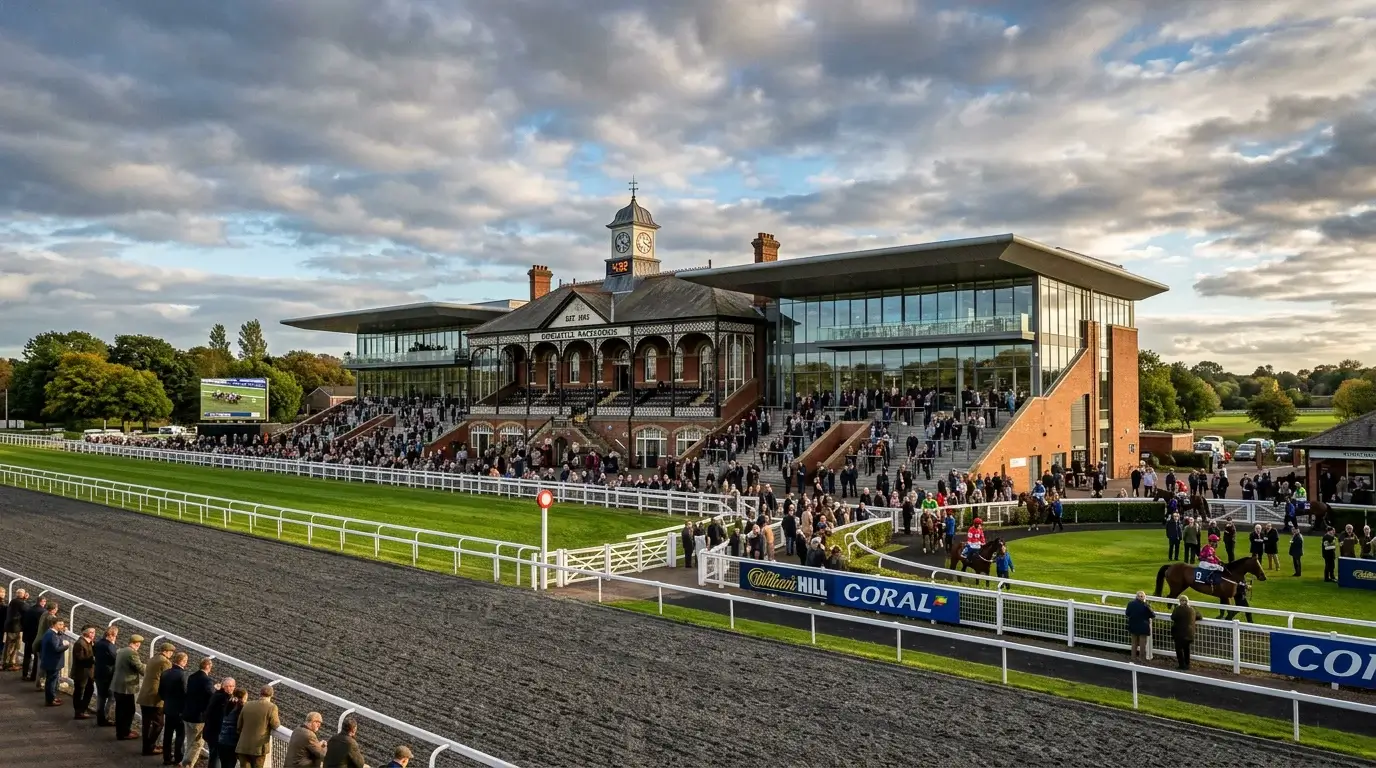
Newcastle racecourse history spans more than 140 years at Gosforth Park, though racing in the northeast predates that permanent home by centuries. The track has evolved from a Victorian enterprise serving local gentry to Britain’s pioneering all-weather venue, hosting Group 1 races on synthetic surface and attracting horses who would later win at the highest levels worldwide. Understanding that journey illuminates why Newcastle matters to contemporary racing.
The racecourse sits within a broader story of northeast England’s industrial rise and transformation. Coal mining, shipbuilding, and heavy manufacturing shaped the region’s character, and racing provided entertainment for communities whose working lives were harsh but whose sporting passions ran deep. The Northumberland Plate earned its “Pitmen’s Derby” nickname because miners took unofficial holidays to attend — a tradition that speaks to racing’s cultural significance beyond mere gambling or spectacle.
Modern Newcastle operates as a dual-purpose venue, hosting flat racing on Tapeta year-round while maintaining a National Hunt programme that includes Grade 1 competition. This versatility distinguishes Gosforth Park from single-code tracks, and the history that produced it involved strategic decisions, infrastructure investments, and adaptation to changing circumstances. From Town Moor to Gosforth Park, from turf to Fibresand to Tapeta, Newcastle’s story is one of continuous evolution.
Early Racing in the Northeast
Horse racing around Newcastle dates to the early seventeenth century, with records indicating organised meetings from the 1620s onward. These early races occurred on common land — areas available for public use where temporary courses could be marked out and crowds could gather without formal infrastructure. The racing was rough by modern standards, with match races between local horses rather than the programmed cards we recognise today.
Town Moor, the expansive common northwest of Newcastle city centre, hosted regular racing through the eighteenth and nineteenth centuries. The Northumberland Plate itself began there in 1833, establishing a staying handicap tradition that would eventually transfer to Gosforth Park. Town Moor racing occurred on turf without permanent facilities — grandstands were temporary, and the lack of infrastructure limited development possibilities.
Killingworth Moor and other sites around the region also hosted racing during this period. The northeast’s affinity for horses extended beyond racing to working animals — pit ponies in mines, dray horses for industry, hunters for rural pursuits. This broader equestrian culture provided both participants and audiences for race meetings, embedding the sport within regional life rather than positioning it as external entertainment.
By mid-century, racing’s increasing professionalisation demanded better facilities. The Jockey Club imposed standards; trainers expected proper courses; owners sought venues worthy of their investments. Town Moor’s limitations became apparent: the site lacked capacity for permanent structures, access proved difficult for growing crowds, and competition from purpose-built racecourses elsewhere threatened Newcastle’s position. Something had to change.
The Move to Gosforth Park
The High Gosforth Park Company formed in 1881 with a specific mission: create a permanent racecourse worthy of the northeast’s racing ambitions. The company acquired land at Gosforth Park, approximately four miles north of Newcastle city centre, and began constructing facilities that would anchor racing in the region for generations. Racing commenced at Gosforth Park in 1882, inaugurating the venue that continues operating today.
The site offered advantages that Town Moor lacked. Private ownership enabled permanent construction — grandstands, stables, administrative buildings — without negotiating common land restrictions. The location provided better transport links as railways expanded, allowing racegoers from Durham, Northumberland, and beyond to attend meetings efficiently. The estate’s scale permitted course configurations impossible on temporary sites, with room for future expansion.
The Northumberland Plate transferred to Gosforth Park immediately, maintaining continuity with the region’s signature race while providing it a proper home. The 1882 relocation marked the race’s fiftieth anniversary, lending symbolic weight to the transition. Other established fixtures followed, consolidating northeast racing at the new venue rather than spreading it across multiple temporary sites.
Initial infrastructure was modest by later standards but revolutionary for its time. The original grandstand accommodated several thousand spectators with covered viewing areas for those who paid premium admission. Betting facilities operated formally rather than through informal transactions. The course itself was carefully designed — distances marked precisely, surfaces prepared systematically, and drainage installed to enable racing through varied weather.
The High Gosforth Park Company’s investment reflected confidence in racing’s economic potential and social significance. Victorian entrepreneurs understood that successful racecourses required capital expenditure and long-term commitment; returns would come through decades of operation rather than immediate profit. That patient approach established Gosforth Park’s foundations and enabled the subsequent evolution that has brought Newcastle to its current prominence.
The Golden Era
The decades spanning 1900 to 1950 represented Newcastle’s emergence as a venue of genuine national significance. The Northumberland Plate grew in prestige, attracting quality horses from beyond the northeast as prize money increased and the race’s staying handicap format proved compelling. Summer Plate day became the highlight of Newcastle’s social calendar, drawing crowds that packed grandstands and spilled across the grounds.
Jump racing developed alongside the flat programme during this period. The Fighting Fifth Hurdle emerged as a feature event, initially without the Grade 1 status it would later earn but already attracting quality hurdlers seeking late-autumn competition. The Eider Chase provided staying chase action, establishing Newcastle’s position within the National Hunt landscape. This dual-code identity — flat racing and jumps — distinguished Newcastle from single-focus venues and created year-round engagement.
The World Wars interrupted racing but didn’t destroy it. Gosforth Park served military purposes during both conflicts, with racing suspended while facilities supported the war effort. Horses were requisitioned; staff enlisted; grandstands housed purposes never imagined by their Victorian builders. Post-war recovery required rebuilding — not just physical structures damaged by use and neglect, but also the relationships with trainers, owners, and audiences that enable successful race meetings. Newcastle’s community connections proved resilient, with local support sustaining the venue through difficult transitions.
Notable horses of this era established Newcastle’s reputation for producing significant form. Winners of major races elsewhere frequently traced their development through Newcastle victories; conversely, horses who proved themselves at Gosforth Park went on to success at York, Doncaster, and beyond. The track served as both proving ground and destination, hosting races of genuine quality while preparing horses for challenges elsewhere.
Training operations in the northeast flourished during this period, with Malton and other northern centres producing horses that competed successfully at Newcastle before targeting national prizes. The proximity of quality trainers enhanced fixture quality: horses didn’t need to travel far for meaningful competition, reducing the logistical burden that might otherwise have sent them south. This regional training infrastructure supported Newcastle’s golden era and would continue contributing to the track’s significance through subsequent decades.
Modern Developments
The second half of the twentieth century brought infrastructure upgrades that modernised Gosforth Park without erasing its Victorian character. Grandstand renovations expanded capacity and improved sightlines. New stabling accommodated larger fields and higher equine welfare standards. Betting facilities evolved from cash transactions to computerised systems. Each improvement responded to changing expectations while maintaining operational continuity.
Evening racing arrived as floodlight technology matured and racing authorities recognised the commercial potential of after-work entertainment. Newcastle’s northern location made summer evenings particularly attractive, with long daylight hours and moderate temperatures. The evening meetings attracted different audiences than traditional afternoon cards — younger demographics, casual attendees, groups seeking social occasions rather than pure sporting focus.
Ownership structures evolved through this period. The original High Gosforth Park Company eventually gave way to corporate operators who managed multiple venues as integrated businesses. Arena Racing Company, which now operates Newcastle alongside many other British racecourses, brought economies of scale and strategic planning that individual ownership couldn’t match. This corporate consolidation reflected broader trends in leisure industry management.
Course modifications refined racing characteristics without fundamental redesign. The track surface received attention as understanding of equine biomechanics improved. Fence construction for jump racing evolved toward safer designs. Starting stall technology replaced flag starts, improving fairness and reducing false-start incidents. Each modification represented incremental improvement rather than revolutionary change.
The fixture list expanded as racing authorities sought to maximise venue utilisation. Where early Gosforth Park might have hosted a dozen meetings annually, modern Newcastle runs regularly through the year. This intensification demanded better infrastructure — surfaces capable of withstanding heavy use, facilities that could operate continuously, staff and systems geared for high-frequency racing rather than occasional events.
The All-Weather Revolution
Newcastle’s transformation into Britain’s pioneering all-weather venue began in 2001 with the installation of Fibresand surface and floodlighting that enabled year-round racing regardless of weather or daylight. The decision represented significant investment and strategic gamble — all-weather racing remained unproven commercially, and purists questioned whether synthetic surfaces could host meaningful competition. Newcastle bet on the future and was proved right.
The Fibresand era established Newcastle as Britain’s premier all-weather track. While Southwell had operated all-weather racing earlier, Newcastle’s facilities and fixture quality quickly surpassed rivals. The floodlit racing created distinctive atmosphere — grandstands illuminated against northern darkness, hooves striking synthetic surface under artificial light, crowds gathering for evening entertainment unavailable elsewhere. This niche positioning attracted specific audiences and trainer commitments.
Arena Racing Company’s ownership enabled strategic development that individual proprietors might have struggled to finance. The company recognised all-weather racing’s growth potential and invested accordingly, improving facilities, expanding fixture allocation, and marketing Newcastle’s unique offering. Other all-weather venues operated successfully, but Newcastle’s combination of track quality, fixture volume, and commercial support established clear leadership.
Fibresand served well but showed limitations over time. The surface required intensive maintenance; racing quality occasionally suffered when conditions deteriorated; trainer complaints about consistency grew. By the 2010s, newer synthetic technologies offered improvements that Fibresand couldn’t match. The decision to upgrade became not whether but when, and what replacement surface would best serve Newcastle’s ambitions.
The years 2001-2016 established all-weather racing’s commercial viability and Newcastle’s position within it. When Tapeta replaced Fibresand, the venue possessed the audience, the fixture allocation, and the infrastructure to maximise the new surface’s advantages. The all-weather revolution laid groundwork; the Tapeta era would build upon it.
The Tapeta Era
Tapeta installation in 2016 marked Newcastle’s transition from all-weather pioneer to all-weather leader. The new surface, already proven at Wolverhampton, offered superior safety characteristics, reduced kickback, and consistency that Fibresand couldn’t match. Trainers responded immediately: field quality improved, entry numbers increased, and serious horses appeared at Newcastle who might previously have bypassed it.
“I have always thought that Newcastle is the best all-weather track in the UK because of its configuration and surface,” observed champion trainer John Gosden. “The Tapeta surface is both safe and true.” That endorsement from a trainer of Gosden’s calibre — a man who has sent Classic winners around the world — captured professional sentiment about Newcastle’s upgraded offering. The track had earned respect that previous surfaces couldn’t command.
History was made in 2019 when Newcastle hosted the Vertem Futurity Trophy, relocated from Doncaster due to waterlogging. The race, then a Group 1 for two-year-olds, became the first top-level flat race run on all-weather surface in Britain. Kameko won impressively, going on to capture the following year’s 2000 Guineas. The precedent established that synthetic surfaces could host racing of the highest quality — a vindication of Newcastle’s strategic investment.
The Tapeta era has seen Newcastle’s attendance grow by 26.38% over the decade from 2014 to 2024, bucking trends that have challenged many British racecourses. That growth reflects successful positioning: a venue offering consistent racing regardless of weather, quality fixtures that justify attendance, and facilities that provide entertainment value beyond the racing itself. The investments in surface technology translated into commercial success.
Contemporary Newcastle operates approximately 80-90 race days annually on Tapeta, plus additional jump racing on the turf course. This volume positions Gosforth Park among Britain’s busiest venues, with fixtures spread across afternoon, evening, and twilight slots throughout the calendar. The track that began as a Victorian enterprise serving regional audiences now competes for national attention against the sport’s established powers.
Legendary Horses
Newcastle’s history features horses whose achievements transcended the venue to shape broader racing narratives. Some won their greatest races at Gosforth Park; others used Newcastle as launching pad for success elsewhere. Together, they demonstrate the track’s capacity to host consequential competition rather than merely filling fixture cards.
Enable, the brilliant mare who won eleven Group 1 races including two Prix de l’Arc de Triomphes, made her racecourse debut at Newcastle. The November 2016 novice stakes saw her win by three and three-quarter lengths, hinting at the ability that would make her generation’s outstanding middle-distance filly. That Enable began her career at Gosforth Park connects Newcastle to the sport’s highest achievements during the modern era. Trainer John Gosden chose Newcastle for that debut deliberately, trusting the track to provide appropriate introduction for a filly of exceptional promise.
Kameko’s Vertem Futurity Trophy victory in 2019 marked a different kind of significance. As the first Group 1 winner on British all-weather surface, his Newcastle triumph validated synthetic racing’s capacity for elite competition. The following year’s 2000 Guineas success confirmed the form, demonstrating that Group 1 ability shown on Tapeta translated directly to Classic achievement on turf. Kameko’s career trajectory endorsed Newcastle’s positioning as a venue capable of hosting racing at the highest level.
Constitution Hill, widely regarded as one of the greatest hurdlers in recent memory, announced himself with a devastating Fighting Fifth victory in 2022. His twelve-length winning margin on Newcastle’s jumping course left no doubt about his Champion Hurdle credentials. The performance became reference point for subsequent hurdling discussions, cited whenever analysts assessed two-mile championship form. Newcastle provided the stage; Constitution Hill delivered a performance that resonates through the sport’s collective memory.
Sir Gino continued the Fighting Fifth tradition of hosting exceptional hurdlers, winning the 2024 renewal in a manner that prompted Champion Hurdle excitement. The race’s capacity to attract such quality speaks to Newcastle’s established position within jump racing’s calendar — trainers trust the venue to provide appropriate championship preparation.
Northumberland Plate winners form their own historical sequence, with Underhand’s three consecutive victories between 1857 and 1859 remaining unmatched. More recent Plate winners — Orfeo, Highland Chief, Who Dares Wins — contributed to the staying handicap’s continuing prestige. Each winner adds to the race’s historical weight, building tradition that extends back nearly two centuries and forward into futures not yet written.
Cultural Significance
Newcastle racecourse’s history cannot be separated from the northeast’s broader social development. The Pitmen’s Derby nickname for the Northumberland Plate captures this connection directly: coal miners made the race their own, attending in numbers that disrupted pit operations and transformed a sporting event into regional celebration. That working-class ownership distinguished Newcastle from racecourses where social hierarchy determined access and engagement.
Industrial decline reshaped the communities that once filled Gosforth Park’s grandstands. The collieries closed; shipyards contracted; manufacturing relocated. Yet racing persisted, adapting to new audiences while maintaining connections to traditional supporters. The track’s survival through economic transformation demonstrated both institutional resilience and continuing relevance — people still wanted racing, even as the industries that had supported generations disappeared.
Contemporary Newcastle serves diverse audiences: serious bettors studying form, families seeking entertainment, corporate groups using hospitality facilities, visitors exploring the northeast’s attractions. This diversification reflects racing’s evolution from specialist pursuit to mainstream entertainment, and Gosforth Park’s positioning within that market. The track that once served miners now serves anyone seeking an afternoon’s engagement.
Economic impact extends beyond gate receipts. Racecourse operations employ local people; visiting trainers and owners spend in local businesses; hospitality functions generate commercial activity; media coverage promotes the region’s profile. Racing contributes to northeast England’s economy through channels invisible to casual observers but significant in aggregate. The industry’s broader contribution to British life — cultural as well as economic — finds specific expression at venues like Newcastle.
Heritage and ambition coexist at Gosforth Park. The Northumberland Plate connects present to past across nearly two centuries; the Fighting Fifth links regional pride to national championship competition; the Tapeta surface positions Newcastle at British racing’s technological frontier. This combination of tradition and innovation defines Newcastle’s contemporary character and suggests its future trajectory.
Racing Heritage, Modern Ambition
Newcastle racecourse history demonstrates how sporting venues evolve through adaptation rather than preservation. The Gosforth Park of 2026 bears little physical resemblance to the Victorian course that opened in 1882, yet continuity persists through the Northumberland Plate’s unbroken sequence, the northeast’s ongoing engagement with racing, and institutional memory that connects present operations to past achievements.
The strategic decisions that shaped Newcastle — relocating from Town Moor, installing Fibresand, upgrading to Tapeta, pursuing Group 1 status — each represented calculated gambles that subsequent success justified. Not every choice proved optimal immediately, but the overall trajectory moved consistently upward: more fixtures, better horses, larger audiences, greater significance. This pattern suggests future evolution rather than static operation.
Understanding this history enriches contemporary engagement with Newcastle racing. The Northumberland Plate carries weight beyond its prize money; the Fighting Fifth connects to championship narratives spanning decades; even routine handicaps occur within contexts that extend backward generations. Racing at Gosforth Park participates in traditions that have outlasted industries, survived wars, and adapted to transformations that would have bewildered Victorian founders.
What comes next remains unwritten. Newcastle’s positioning as Britain’s leading all-weather venue creates opportunities for further development — more significant races, improved facilities, expanded audiences. The track that pioneered floodlit synthetic racing might pioneer other innovations as technology and audience expectations evolve. History suggests Newcastle will adapt, as it has adapted before, finding new forms for enduring purposes.